Roof shingles curling: Repair or replace?
Quick answer
Curling roof shingles do not automatically require full replacement. Isolated distortion may support a localized repair, while repeated curling across a slope, brittle surrounding shingles, leaks, or damage below the covering justify a broader repair-versus-replacement assessment. A new roof needs prompt installer and manufacturer documentation before anyone alters it.
Common questions
- Do curling roof shingles always need to be replaced?
- No. A roofer may be able to replace a few affected shingles when the distortion is isolated and the surrounding roof, underlayment, and deck remain serviceable. Repeated curling, brittle shingles, leaks, or damage below the covering can make a broader scope more defensible.
- Why are shingles curling on a new roof?
- A photograph alone cannot identify the cause. New-roof waviness or lifting can involve temporary product behavior, unsealed tabs, fastening, underlayment, deck movement, storage, or installation conditions. Record the pattern and contact the installer and manufacturer before authorizing an alteration.
- Can curling shingles be glued down with roof cement?
- Do not treat roof cement or adhesive as a universal cure. The correct work depends on the installed shingle, the reason it is distorted, adjacent material condition, and manufacturer instructions. An undocumented patch may also complicate a warranty or insurance evaluation.
- When are curling shingles urgent?
- Arrange prompt professional help after a storm, when tabs are loose or missing, underlayment is exposed, water is entering, ceilings are bulging, or the roofline is sagging. Keep people away from the area and do not climb onto the roof to inspect or tarp it.
Source note: Guidance was checked in September 2026 against GAF and CertainTeed homeowner material, the Asphalt Roofing Manufacturers Association, current GAF warranty language, and OSHA fall-prevention guidance. The installed product instructions, warranty, and locally adopted requirements control each project.
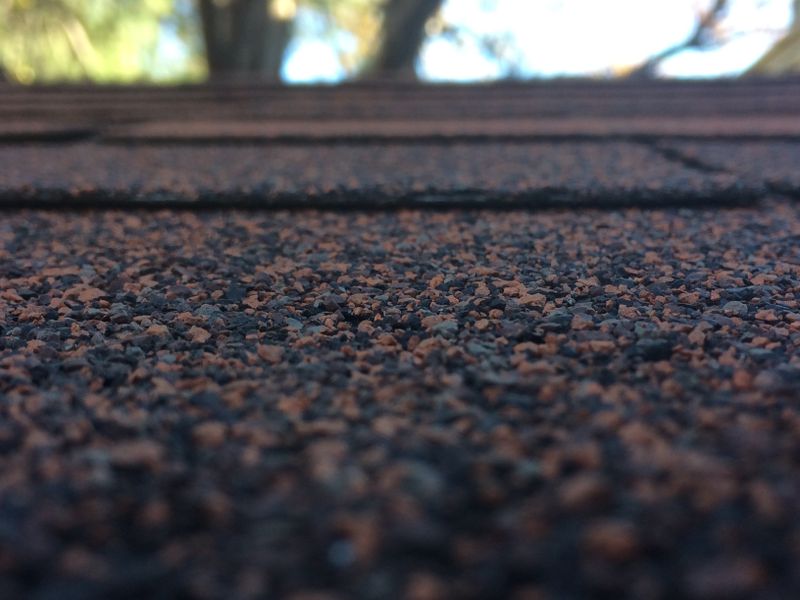
Curled roof shingles can point to a small repair, widespread aging, a wind-related problem, or movement below the roof covering. The shape alone does not settle which one. Map the pattern, spread, roof age, leaks, and warranty status before choosing repair or replacement.
Use this guide to document asphalt or architectural shingles from the ground and ask roofers to price the same scope. It is not a do-it-yourself repair procedure or a diagnosis from appearance alone.
Stay off the roof. Use ground-level binoculars or a zoom camera, and leave roof access to a qualified contractor with appropriate fall protection. OSHA’s residential roofing guidance explains why professional roof work requires fall controls; it is not permission for unprotected homeowner access.
Curl pattern × spread × roof age decision matrix
Start with what is visible, then ask a roofer to confirm the assembly and cause. “Cupping,” “clawing,” “lifting,” and “buckling” are useful descriptions, not proof of one failure mechanism.
| Ground-visible pattern | Spread and timing | Age or warranty context | What to request |
|---|---|---|---|
| Edges or corners turn upward, often called edge curl or cupping | One or a few shingles in a defined area | Any age | A close inspection of the affected shingles, fasteners, seal, adjacent material, and layers below; ask whether individual replacement can be integrated without damaging brittle neighbors |
| Edge curl repeats across many courses or most of a slope | Widespread or gradually increasing | Older or age unknown | A slope-by-slope condition map and separate prices for localized, sectional, and full-roof work; include deck and ventilation observations without assuming either is the cause |
| The center of a shingle rises while edges appear lower, sometimes called clawing | Isolated versus repeated is more important than the label | Any age | Confirmation of the exact product and an inspection for material condition, fastening, substrate flatness, and moisture clues; do not accept an appearance-only cause |
| Tabs sit up, flutter, crease, or no longer appear sealed | Appears after wind or is confined to exposed edges and slopes | Check wind warranty and insurance notice rules | A prompt wind-damage inspection that distinguishes an unsealed tab from a creased, torn, or displaced shingle; document before repair |
| Waves or raised lines run through several courses | Pattern follows rows, panel edges, or a localized deck area | Especially important on a new roof or reroof | Inspection of underlayment, deck movement, fastening, and installation details. ARMA notes that buckling can occur on new roofs and is often associated with underlayment wrinkles or wood-deck movement |
| Curling appears with widespread cracking, bald areas, brittleness, or leaks | Multiple slopes or repeated repair areas | Roof is later in its documented service life | A full-system assessment comparing remaining repairable areas with section or roof replacement; use our granule-loss guide for the surface condition rather than folding every symptom into “curling” |
GAF lists missing, cracked, or curling shingles as a possible sign that shingles have reached the end of useful life. That is a useful warning, not a universal verdict. CertainTeed also notes that slight edge curl can appear during an initial aging or curing stage and may vary with temperature. Product, pattern, spread, installation, exposure, and the condition below the shingles still need to be evaluated together.
What to photograph from the ground
Create a simple record before a contractor moves or removes material. Take photos only from stable ground, a public vantage point, or a safely accessible window.
- Capture the whole building. Photograph every visible slope so the affected area has context.
- Mark the pattern. Note whether curl appears at eaves, rakes, ridges, valleys, penetrations, roof-to-wall areas, or in the open field.
- Show spread. Take one wide image and one zoomed image from the same direction. Record whether the condition affects one shingle, one course, one slope, or several slopes.
- Record timing and weather. Note the first observation, recent wind or hail, leaks, temperature, and whether the shape looks different later. Do not use one warm or cold day to declare the cause.
- Document indoor evidence. From safe indoor areas, photograph ceiling stains, damp finishes, or accessible attic moisture. Keep away from bulging ceilings, suspect electrical areas, and any sagging structure.
- Preserve roof records. Gather the contract, permit, invoice, product name and color, installation date, warranty registration, prior repair records, and any bundle labels or lot information you already possess.
Do not lift a tab to “test” it, press a curl flat, or climb a ladder for a closer photo. Those actions can damage the shingle, create a fall hazard, and change the evidence a contractor, manufacturer, or insurer needs.
New roof shingles curling or not lying flat
A new-roof concern deserves a different sequence from ordinary aging. Contact the installing contractor promptly and describe where, how much, and when the distortion appeared. Ask the contractor to identify the exact shingle and provide the applicable installation instructions rather than offering a generic explanation.
Before authorizing a patch, ask:
- whether the installer or manufacturer wants to inspect the unchanged condition;
- whether weather exposure or a stated observation period is relevant to that exact product;
- whether the pattern follows the deck, underlayment, courses, bundles, or roof details;
- what measurements and photos will be included in the report; and
- how any proposed work affects workmanship, material, and wind-warranty rights.
Warranty rules are product-specific. For example, GAF’s current shingle warranty says a claim may be denied if covered products are repaired or replaced before notice and evaluation. Review the installed product’s documents and our roofing warranty guide before anyone alters the evidence.
When localized shingle repair may be reasonable
A localized scope is easier to support when the contractor documents all of the following:
- only a few shingles in a clearly mapped area are affected;
- surrounding shingles remain flexible and serviceable enough for the planned work;
- the suspected cause is confined rather than repeated across the roof;
- underlayment, deck, flashing, and adjacent details are sound or have a defined local scope;
- a compatible replacement can be installed under the exact product instructions; and
- no active leak, structural concern, warranty hold, or insurance inspection requires a broader response.
“Glue it down” is not a complete repair specification. Sealants and roof cement have product-specific uses, compatibility limits, and preparation requirements. A lifted tab, an aged curled shingle, and a ridge of deck-related buckling are not interchangeable defects. Use the roof cement versus roof sealant guide only after a professional identifies the repair detail.
When to compare section work with full replacement
Request broader options when curling repeats across a slope, adjacent shingles are brittle, different repair areas keep appearing, water has reached the deck, or several roof-system defects overlap. Compare the evidence with our broad signs you may need a new roof guide, but do not use a fixed age or affected-area percentage as an automatic cutoff.
Ventilation may belong in the assessment, but curling does not prove a ventilation defect. Ask for intake, exhaust, air-sealing, moisture, and code observations as a separate scope; the roof ventilation guide covers those design questions. Likewise, round impact marks or blisters need the distinct documentation process in our blistering versus hail guide.
Curling-shingle quote checklist
Give each bidder the same photos and roof history, then require a written answer to these items:
- exact shingle product if identifiable, plus the installation or repair instructions used;
- mapped quantity and location of curled, lifted, creased, cracked, or missing shingles;
- likely cause stated as a finding, a testable hypothesis, or still undetermined;
- condition of nearby shingles and the risk of damaging them during access or removal;
- observations about fasteners, seal strips, flashing, underlayment, decking, and attic moisture;
- repair, section-replacement, and full-replacement options where each is technically viable;
- unit prices or authorization steps for concealed deck or underlayment work;
- permit, disposal, ventilation, flashing, and warranty responsibilities; and
- before-and-after photos, workmanship coverage, exclusions, and a leak-response contact.
If you need an independent written assessment before collecting bids, use the roof inspection cost guide to distinguish a condition report from a sales estimate.
When to act now
Arrange prompt professional help if water is entering, tabs are loose after a storm, material has fallen, underlayment is exposed, a ceiling is bulging, or the roofline is sagging. Keep people away from the affected interior and exterior areas. Do not climb onto the roof or install your own emergency tarp.
For a nonurgent condition, take the photo set, gather the product and warranty records, and request comparable written scopes. The best next step is not choosing repair or replacement from one curled edge; it is preserving the evidence and making each contractor explain the pattern, cause, and complete water-control scope.

Shingle Science Editorial Team
Independent trade-focused editorial team