Solar shingles vs. solar panels: A 2026 decision guide
Quick answer
Solar panels usually preserve a serviceable roof and allow broader equipment and installer choice. Solar shingles combine the roof covering and PV system, so they deserve consideration mainly when the roof already needs replacement and a qualified local installer can support the exact product. Compare complete written scopes and modeled annual kWh, not national price or efficiency averages.
Common questions
- Are solar shingles still available in 2026?
- Yes, the category still exists. GAF Energy publishes a March 2026 data sheet for Timberline Solar ES 2. Tesla's public Solar Roof page now redirects to Solar Panels, and August reporting says new Tesla tile supply ended, although limited installer inventory may remain.
- Which option produces more electricity?
- A product label alone cannot answer that. Compare each design's DC capacity and modeled annual kWh using the same shade, tilt, azimuth, and loss assumptions. Available roof area and layout may matter more than a module efficiency percentage.
- Do 2026 solar shingles or panels receive a federal tax credit?
- A system completed in 2026 does not qualify for a new Section 25D residential clean energy credit. The IRS says expenditures after December 31, 2025 are not allowed, including installations completed after that date.
Source note: Reviewed October 5, 2026 against current GAF Energy product documents, Tesla availability reporting, DOE consumer guidance, NREL PVWatts, and IRS credit-termination guidance.
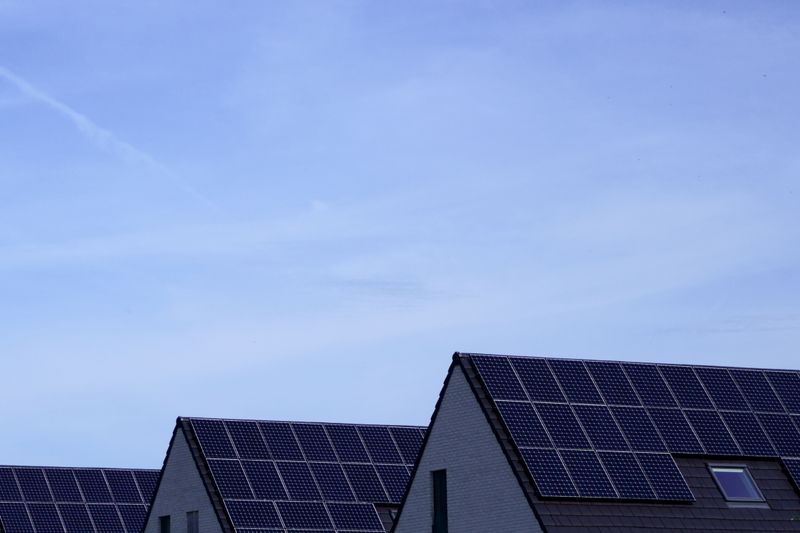
Choosing between solar shingles and solar panels is not a contest between “better-looking” and “better-value” technology. It is a whole-roof project decision involving roof condition, usable solar area, electricity needs, installer coverage, service responsibility, warranties, financing, and schedule risk.
The safest 2026 answer is conditional: keep a sound roof and compare conventional panels when replacement is not due; compare a complete solar-shingle roof when replacement is already justified and a qualified local contractor supports the exact system. Then require both proposals to show the same inputs.
What is actually available in 2026?
Conventional rooftop panels remain a broad product category offered through many local installers. A panel system attaches modules to racking above an existing roof; it does not replace the roof covering.
Solar shingles are building-integrated photovoltaic roofing. They perform part of the weather-shedding roof function while generating electricity. The category remains active, but product and installer coverage are local. GAF Energy’s current Timberline Solar ES 2 data sheet, dated March 2026, identifies a 57-watt nailable energy shingle, a minimum 2:12 roof pitch, system certifications, and installation constraints. Those specifications do not establish availability or price at a particular address.
Tesla is the important exception. Its former Solar Roof URL redirects to Solar Panels. Electrek reported on August 20 that Tesla ended new tile supply to certified installers. TechCrunch reported on August 21 that two installers were still offering Solar Roof, apparently subject to timing and remaining inventory. This is attributed reporting, not a Tesla press release, and it does not prove that every existing order or tile inventory has ended.
Read our Tesla Solar Roof availability and cost guide before treating an installer-held Tesla system as comparable to a product in normal distribution.
Start with the roof, not the solar product
The Department of Energy’s Homeowner’s Guide to Solar recommends considering roof age, shape, slope, shade, electricity use, installer qualifications, and financing. Those inputs also reveal whether shingles and panels are solving the same problem.
- Roof has substantial service life remaining: panels may avoid discarding a functioning roof. Confirm attachment details and future removal/reinstallation responsibility.
- Roof replacement is already supported by condition: compare an integrated shingle system with the combined price and scope of a new roof plus panels.
- Roof is shaded, small, or divided into many planes: require a site design. Neither technology can create productive solar area where orientation and shade prevent it.
- Decking, framing, flashing, or ventilation needs work: put those repairs in every proposal so one option does not appear cheaper by omitting roof work.
Use our new roof cost guide to define the roofing scope before comparing energy systems.
Input-based decision matrix
Fill this out with proposal-specific facts. A blank or “TBD” answer is project risk, not a reason to insert a national average.
| Decision input | Solar shingles | Solar panels | Evidence to request |
|---|---|---|---|
| Roof need | Usually paired with new or replacement roofing | Can often remain on a serviceable roof | Roof condition report, remaining-life basis, tear-off and deck scope |
| Site and layout | Product-specific pitch, deck, edge, flashing, shade, and active-area limits | Product- and racking-specific placement, setbacks, attachment, and shade limits | Dimensioned roof plan, shade study, code setbacks, attachment or shingle layout |
| Capacity and annual energy | Active shingle count and DC kW do not equal guaranteed kWh | Panel count and DC kW do not equal guaranteed kWh | DC capacity, modeled annual kWh, tilt, azimuth, losses, and production-guarantee terms |
| Installer and service | Requires support for the exact roofing/PV product | Wider category, but service still depends on installer and equipment | Licenses, certifications, subcontractors, service territory, response path |
| Battery and backup | Separate design decision; solar alone normally shuts down during an outage | Same | Critical-load plan, usable battery capacity, output, transfer equipment, warranties |
| Warranty | Roofing, PV output, electronics, workmanship, and leak terms may be separate | Module, inverter, racking, roof penetration, and workmanship terms may be separate | All current warranty PDFs and the installer agreement |
| Cash price | Must include complete roof and electrical scope | Add roof work needed now or during system life | Itemized cash proposal and allowances |
| Finance price | Payment can obscure dealer fees, rate changes, or ownership terms | Same | APR, term, escalation, fees, prepayment terms, and total of payments |
| Project-risk owner | Coordination may be concentrated or split among roofer, electrician, manufacturer, and utility | Often split among roofer, solar installer, equipment makers, and utility | Responsibility matrix for leaks, delays, failed inspections, redesign, and service |
The winning option is the one that fits the site and ownership plan with the clearest enforceable scope—not the one with the most favorable marketing table.
Compare capacity and kWh without efficiency shortcuts
Module efficiency is a laboratory conversion ratio. It can help when usable roof area is tight, but it does not tell you annual home energy production by itself. A design also depends on installed DC capacity, orientation, tilt, shade, temperature, inverter sizing, wiring and other losses, and local weather.
Ask each bidder for:
- DC system capacity in kilowatts
- Modeled first-year AC production in kilowatt-hours
- The roof planes, tilt, azimuth, and shade assumptions used
- The loss percentage and each included loss category
- Any production guarantee, adjustment process, and exclusions
Enter the same inputs into NREL’s PVWatts Calculator as a reasonableness check. PVWatts explicitly uses assumptions and cannot model every product or site condition, so it should not replace an on-site design or contractual guarantee.
Normalize the money without inventing a payback period
A responsible comparison does not apply one national price per watt to every roof. Request two itemized pathways:
Integrated solar-shingle pathway
- Tear-off, disposal, and deck allowance
- Underlayment, flashings, ventilation, roof accessories, and non-solar field shingles or tiles
- Energy shingles, inverter, shutdown equipment, wiring, permits, interconnection, and commissioning
- Optional battery and backed-up-load work shown separately
Conventional roof-plus-panel pathway
- The same roof repair or replacement assumptions
- Roofing contract and workmanship warranty
- Panel, racking, attachment, inverter, wiring, permits, interconnection, and commissioning
- Future panel removal/reinstallation terms if the existing roof will need replacement first
For both, compare cash price with cash price. If financing, compare the total of payments, fees, ownership, lien or filing terms, transfer obligations, and payment changes—not just the first monthly payment.
Do not accept a savings or payback claim until the proposal states current utility rates, rate escalation, export compensation, consumption changes, degradation, maintenance, equipment replacement, and financing assumptions. Those variables belong in a scenario range, not a guaranteed outcome.
Treat service and warranty as design inputs
Integrated roofing can reduce visual hardware, but it also couples roof service with specialized electrical components. Conventional panels use standardized modules and racking, yet roof penetrations, removal, inverter service, and installer survival still matter.
Before signing, identify who handles each event:
- Roof leak at or away from the solar area
- Failed shingle, module, inverter, optimizer, or shutdown device
- Removal for roof, chimney, or structural work
- Manufacturer-approved replacement when the original installer is unavailable
- Monitoring failure or unexplained production drop
- Warranty labor, travel, shipping, diagnostic, and permit charges
GAF’s Timberline Solar limited warranty, for example, separates assembly manufacturing defects, power capacity, wind coverage, inverter coverage, and optional enhanced coverage. Tesla’s live warranty separates product, weatherization, module output, power electronics, installer workmanship, and labor remedies. The headline term is never the whole warranty.
Use our roofing warranties guide to compare exclusions, proration, transfer, approved service, and documentation.
Federal tax treatment changed for 2026
A new residential solar system completed in 2026 does not receive the former federal 30% Section 25D credit. The IRS OBBB FAQ says expenditures after December 31, 2025 are not allowed. An installation completed after that date is treated as a later expenditure even if paid for earlier.
Do not use an old after-credit price in a 2026 comparison. State, local, and utility programs may still apply, but must be verified for the address, utility, equipment, ownership, and application date. Our 2026 roof and solar tax credit guide provides a verification checklist.
Which option fits your project?
Favor a panel comparison first when the roof is serviceable, installer choice matters, you want equipment flexibility, or you may need to service the roof and energy system separately.
Include solar shingles when roof replacement is already justified, integrated appearance has real value to you, the site supports adequate capacity, and a qualified installer can document supply, service, and warranty responsibility.
Pause both pathways when the roof condition is unknown, annual electricity use is unavailable, a shade study is missing, the utility rules are unclear, or a salesperson will not provide cash and finance terms in writing.
Your next step is simple: obtain at least two proposals built on the same roof scope and energy target, run their inputs through the matrix above, and resolve every blank before signing.

Shingle Science Editorial Team
Independent trade-focused editorial team