Slate Roof vs Synthetic Slate: Which Offers Better Value?
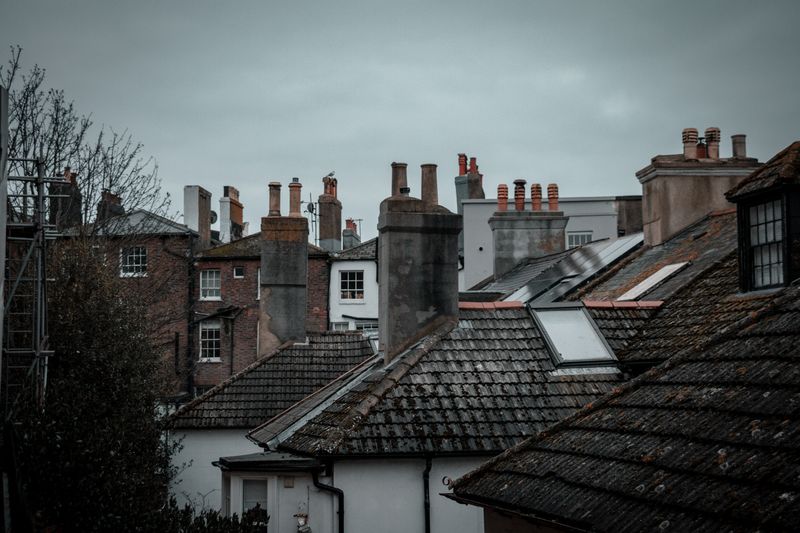
Few roofing materials carry the prestige of natural slate. Walk through any historic New England neighborhood or look up at a century-old church and you’ll likely see slate still doing its job — quietly, beautifully, and without complaint. But natural slate’s price tag and structural demands put it out of reach for most homeowners. That’s what makes synthetic slate so interesting: it promises the look at a fraction of the cost. But does it deliver? And what does “better value” actually mean when one product lasts 50 years and the other can last 150?
Let’s break it down.
What Is Natural Slate?
Natural slate is a fine-grained metamorphic rock quarried primarily in Pennsylvania, Vermont, Virginia, and parts of New York — as well as internationally from Wales, Spain, and China. It splits naturally into flat, thin sheets along its cleavage planes, making it ideal for roofing tiles.
Slate is graded by expected lifespan: S1 (75+ years), S2 (40–75 years), and S3 (20–40 years). Premium quarries in Vermont and Pennsylvania reliably produce S1-grade slate. Budget imports from China often grade out at S2 or S3.
The material itself is dense, non-porous, and essentially impervious to weather. It doesn’t rot, it doesn’t burn, it doesn’t absorb UV radiation, and it doesn’t react to freeze-thaw cycles the way softer materials do. A well-installed natural slate roof can genuinely outlast the building beneath it.
What Is Synthetic Slate?
Synthetic slate — also called composite slate, polymer slate, or recycled rubber slate — is manufactured to mimic the appearance of natural slate using engineered materials. The most common compositions include:
- Polymer/plastic blends — molded from virgin or recycled polypropylene or polyethylene
- Rubber composites — made from recycled tire rubber, sometimes blended with plastic
- Fiber cement — compressed cement and cellulose fibers, similar to fiber cement siding
- Slate-polymer hybrids — blended with actual crushed slate dust for improved UV stability
Brands like DaVinci Roofscapes, CertainTeed Belmont, and Brava Roof Tile dominate this market. Products are typically warranted for 50 years and engineered to meet Class A fire ratings and Class 4 impact ratings (the highest available for hail resistance).
Side-by-Side Comparison
| Feature | Natural Slate | Synthetic Slate |
|---|---|---|
| Lifespan | 75–150+ years | 40–50 years |
| Cost installed | $30,000–$50,000+ | $15,000–$25,000 |
| Weight | 700–1,500 lbs/square | 150–250 lbs/square |
| Structural reinforcement | Often required | Not required |
| Fire rating | Class A | Class A |
| Hail rating | Variable (can crack) | Class 4 (impact) |
| Skilled installer required | Yes — specialist | Standard roofer |
| Appearance accuracy | Authentic | Very good to excellent |
| Color stability | Permanent | 20–30 years (fading) |
| Environmental impact | Low (natural quarried material) | Moderate (polymer) |
| Repairability | Individual tile replacement | Individual piece replacement |
Cost Analysis: Natural Slate
Natural slate installation is genuinely expensive. Here’s why:
Material cost for premium domestic slate (Vermont or Pennsylvania S1 grade) runs $600–$1,500 per square (100 sq ft) just for the slate tiles. Spanish or Chinese slate runs $200–$600 per square, with lower expected lifespan.
Installation labor is where costs really accumulate. Slate installation requires a specialist — not a general roofer. Slate roofers drill each tile individually, use copper or stainless nails, and work slowly and carefully. Labor typically runs $400–$800 per square, and in high-cost markets (the Northeast, California) it can exceed $1,000 per square.
Structural reinforcement adds cost on many homes. Natural slate at 700–1,500 lbs per square is 5–10x heavier than asphalt shingles. Most homes built in the past 50 years weren’t designed for that load. A structural engineer may need to assess the roof framing, and sister joists or additional support may be required — adding $3,000–$10,000 to the project.
Total installed cost on a 2,500 sq ft home (25 squares): $30,000–$50,000 for domestic S1 slate. Premium projects in high-labor markets can exceed $80,000.
Cost Analysis: Synthetic Slate
Synthetic slate is considerably more approachable:
Material cost for quality synthetic slate tiles ranges from $250–$500 per square. Entry-level products from lesser-known manufacturers can be found for less, but warranty and quality control varies significantly.
Installation labor is standard roofing labor. Any experienced roofer familiar with the specific product can install synthetic slate. Labor runs $150–$350 per square in most markets.
No structural concerns. At 150–250 lbs per square, synthetic slate falls within the load tolerance of virtually any residential roof structure.
Total installed cost on a 2,500 sq ft home (25 squares): $15,000–$25,000. Premium products at the top of the range may run closer to $30,000 installed.
The Cost-Per-Year Analysis
This is where the comparison gets genuinely interesting.
Natural slate (S1 grade, 100-year lifespan):
- Installed cost: $40,000
- Cost per year of protection: $400/year
Synthetic slate (50-year lifespan):
- Installed cost: $20,000
- Cost per year of protection: $400/year
At first glance they look identical. But here’s the catch: when your synthetic slate roof reaches the end of its 50-year life, you’ll need a replacement. If installation costs rise with inflation at 3% per year, a $20,000 synthetic roof today costs roughly $45,000 in 50 years. Your total 100-year cost: $65,000 — versus $40,000 for the natural slate installed once.
Over a 100-year horizon, natural slate wins on cost per year of protection — if you own the home that long, and if the structural upgrade costs are manageable.
For the typical homeowner who moves every 10–15 years, this math shifts entirely. You’ll never capture natural slate’s longevity premium. Synthetic slate’s lower upfront cost, combined with its excellent curb appeal and warranties, makes it the clear practical choice.
Appearance: How Close Is the Imitation?
This is the most common question, and the honest answer is: it depends on the product.
Budget synthetic slate (under $200/square material cost) often looks noticeably plastic. The texture lacks depth, the color is too uniform, and the pieces have a regularity that reads as fake to a discerning eye.
Premium synthetic slate from manufacturers like DaVinci, Brava, or CertainTeed is genuinely impressive. Multi-piece mold technology creates subtle variation in texture, thickness appearance, and color blending that reads as authentic from the street — and sometimes even up close. Side-by-side with real slate, a trained eye can spot the difference. From 40 feet away, most people cannot.
Natural slate, of course, is the real thing. Each tile has unique color variation and character that no manufactured product fully replicates. The slight imperfections — a faint vein, a variation in thickness — contribute to an organic authenticity that’s genuinely hard to fake.
Environmental Considerations
Natural slate is a quarried material, so extraction has environmental impacts — land disruption, dust, heavy equipment. However, it requires no petrochemicals in manufacturing, releases no off-gassing, and lasts so long that its lifecycle environmental footprint is comparatively low. Some recycled slate programs recover salvaged slate from demolition projects, which is environmentally excellent.
Synthetic slate typically contains significant polymer or rubber content. Recycled-content products (like those using old tires) do divert waste from landfills. But polymer products aren’t easily recyclable at end of life, and the manufacturing process is energy-intensive. Some products contain fire-retardant additives with their own environmental profiles.
If environmental impact is a primary concern, natural slate — especially domestic S1 — has a strong argument.
Warranties
Natural slate doesn’t typically come with a manufacturer warranty on the material itself — it’s stone. The warranty you have is essentially geological history. What you do get is a contractor warranty on the installation (typically 1–5 years from the installer).
Synthetic slate usually carries a 50-year limited manufacturer warranty. Review the fine print carefully: many warranties are prorated, meaning the manufacturer’s contribution decreases with every passing year. A 50-year prorated warranty that pays out 10% of material cost at year 40 isn’t particularly meaningful. Look for non-prorated or limited lifetime warranties from premium brands.
Which Is Right for Your Home?
Choose natural slate if:
- You own a historic home and want to preserve its authenticity
- Your home’s structure can support the weight (or can be reinforced cost-effectively)
- You plan to own the home for decades and want a true once-in-a-lifetime installation
- Budget is not a limiting factor
Choose synthetic slate if:
- You want slate’s appearance at a realistic price point
- Your home’s structure can’t support heavy natural slate
- You need Class 4 impact resistance (common in hail-prone areas)
- You want a standard roofing contractor to handle installation
- You plan to sell within 15–20 years
Both products represent a significant upgrade over asphalt shingles in aesthetics and longevity. The decision ultimately comes down to your timeline, your budget, and how much authenticity matters to you. For most homeowners in 2026, premium synthetic slate hits a sweet spot that’s hard to argue with.

ShingleScience Team
Roofing Contractor & Founder of ShingleScience