Roof shingles not laying flat: wait or call the roofer?
Quick answer
Some new asphalt shingles installed in cool conditions may relax and seal after suitable sun and heat exposure, but there is no universal waiting period or temperature. Isolated lifted tabs, straight-line or persistent buckles, loose fastener points, active leaks, or visible movement need prompt installer or roofer evaluation.
Common questions
- Will new roof shingles flatten on their own?
- Some shingles installed in cool conditions may relax and seal after suitable exposure to sun and heat, but sealing time varies with the product, roof slope, orientation, and weather. Notify the installer, preserve evidence, and follow the exact product instructions instead of relying on a universal number of days or temperature.
- Why does a new roof look wavy?
- Widespread soft waviness can differ from straight lines at deck joints, random underlayment-like ripples, or isolated fastener bumps. A ground-level photo cannot confirm the cause; the installer should compare the pattern with the deck, underlayment, fastening, storage, and product instructions.
- Are architectural shingles supposed to look uneven?
- Architectural shingles create intentional shadow lines and thickness changes, but raised edges, buckles, or ripples are not automatically part of the design. Compare the suspect area with the product's published appearance and ask the installer to document any physical distortion.
- Should I press, glue, heat, or re-nail a raised shingle?
- No. Do not walk the roof, lift tabs, apply heat, add adhesive or roofing cement, or drive fasteners. Those actions can damage shingles, create fall risk, hide the cause, and complicate installer or manufacturer review.
Source note: Checked November 2026 against ARMA's March 2024 buckled-shingle bulletin and cold-weather guidance, current GAF product instructions and field guidance, and the current Owens Corning warranty claim process. The exact installed-product instructions, warranty, site conditions, and qualified inspection control the decision.
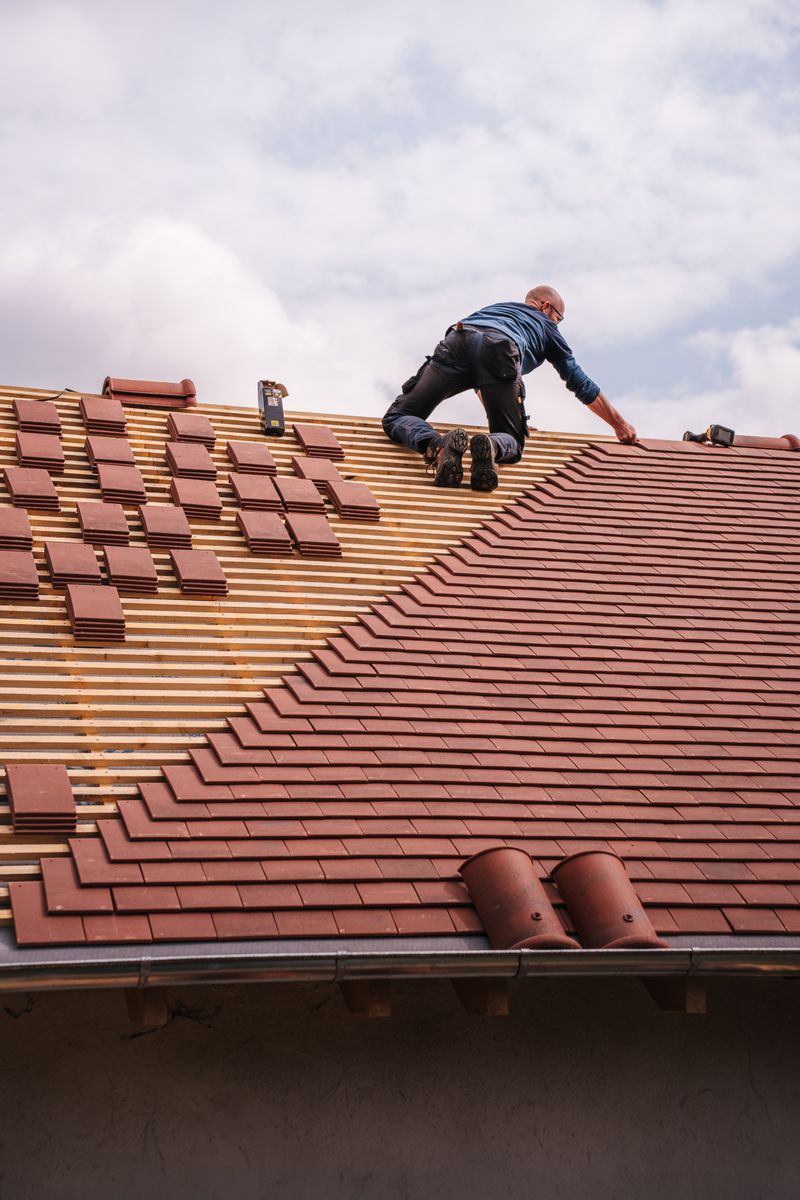
A new roof that looks rippled or has shingles not laying flat can be unsettling. Some asphalt shingles installed in cool conditions may relax and seal after suitable sun and heat exposure, but there is no universal number of days or temperature that guarantees flattening.
Notify the installer and photograph the unchanged condition now. Do not simply wait if you see isolated lifted tabs, straight lines that match deck joints, persistent or worsening buckles, loose fastener points, active water entry, or visible structural movement.
Stay off the roof. Do not lift tabs, press down raised shingles, re-nail, apply heat, or add adhesive or roofing cement. Use a zoom camera from stable ground and leave close inspection to a qualified roofer with fall protection.
First, separate sealing from flattening
Most asphalt shingles use a thermally activated sealant. ARMA says in its cold-weather installation guidance that sealing time varies with roof slope, orientation, and sun and heat exposure. A colder installation may therefore take longer to seal than one in different conditions.
That does not mean every wave will disappear with warmer weather. A raised line caused by movement or unevenness below the shingles is different from an unsealed edge. ARMA’s March 2024 buckled-shingle bulletin identifies deck movement, underlayment wrinkles, uneven decking, high fasteners, distorted material, and debris as possible contexts for different patterns.
The safe rule: ask the installer to identify the exact product and explain in writing whether monitoring is supported by that product’s instructions. Do not accept “give it time” without a documented baseline, an agreed review point tied to suitable conditions, and a plan if the appearance persists or worsens.
Ground-level pattern matrix
This matrix screens urgency; it does not diagnose the roof from a photograph.
| Pattern visible from the ground | What it may be consistent with | Best next step |
|---|---|---|
| Widespread, soft waviness after a cool-weather installation | Shingles retaining some bundle shape, cold-weather handling effects, or sealant that has not yet activated | Notify the installer, record installation weather and product details, and request product-specific written monitoring criteria; do not assume a fixed deadline |
| Straight raised lines that repeat at regular intervals | Deck-panel joints, spacing or moisture-related deck movement, or an uneven substrate telegraphing through the covering | Request prompt installer inspection of the pattern and deck scope; compare with the roof decking guide without self-diagnosing a deck defect |
| Random ripples or buckles across an area | Wrinkled underlayment, trapped debris, storage distortion, or another localized condition below the shingles | Ask the installer to map the affected area and compare the underlayment and installation record with the roof underlayment guide |
| One raised edge, corner, or small bump at a fastener point | An unsealed tab, underdriven or displaced fastener, trapped material, or local shingle distortion | Arrange a close professional inspection; use the roof nail-pop guide to understand what the roofer should document |
| Upturned edges or cupped centers on an older roof | Age-related curling, material condition, exposure, or a broader roof-system issue | Use the curling-shingle decision aid to compare spread, brittleness, leaks, and repairability |
| Any pattern with an active leak, sagging, major cracking, loose material, or visible movement | A water-entry, attachment, deck, or structural concern that cannot be screened safely from the ground | Keep people clear, avoid wet electrical equipment, and request urgent qualified evaluation; call emergency services when immediate life safety is at risk |
Architectural shingles have layered construction and intentional shadow lines, so their surface will not look like a perfectly uniform sheet. However, architectural shingles not laying flat should not be dismissed as “the design” when edges are physically lifted, courses are buckled, or the pattern changes over time. Compare the same slope in similar light and ask for the manufacturer’s published product image and installation instructions.
What to document before anyone alters the roof
Build one installer and warranty evidence packet. Ground-level photos are more useful when they are paired with product and project records.
- Installation date and conditions: date each slope was installed; approximate temperature, precipitation, wind, and whether the roof or materials were damp or cold.
- Product identity: manufacturer, product line, color, plant or bundle code, lot number, wrapper photos, and leftover labels.
- Installer records: signed contract, invoice, permit, crew or subcontractor name, completion photos, punch-list notes, and workmanship warranty.
- Deck and underlayment scope: tear-off versus overlay, replaced deck sheets, panel material and thickness, wet-area notes, underlayment brand, and progress photos before shingles covered the assembly.
- Pattern photos: one wide image of every visible slope plus zoomed images of each raised area, labeled by date and location.
- Change over time: repeat the same views after relevant weather, without promising that a certain number of warm days will settle the roof.
- Interior evidence: ceiling stains, drips, accessible attic moisture, or movement photographed from a safe, dry location without touching wiring or walking framing.
- Product documents: the installation instructions and warranty that apply to the exact product and installation date, not a generic shingle brochure.
Keep original files and written correspondence. Do not edit images in a way that removes date or location context.
What to ask the installer
Send the evidence packet in writing and ask for a response that separates observation from conclusion:
- What exact shingle, underlayment, and deck assembly was installed?
- Which current product instruction applies, and where does it address storage, deck preparation, fastening, sealing, and cold-weather handling?
- Is the pattern widespread, aligned with deck joints, random, or isolated at fasteners?
- What evidence supports monitoring rather than opening or repairing the area?
- What conditions and documented review point will trigger reinspection?
- Does the condition fall under the workmanship warranty, or should the manufacturer be notified before alteration?
- If work is proposed, how will the contractor preserve photos, removed material, product labels, and claim rights?
For example, current GAF Timberline HDZ instructions address storage, deck preparation, fastening, and application for that product. They are not a substitute for instructions belonging to a different brand or shingle line.
If the original contractor is unresponsive or gives no product-based explanation, use the roofing contractor guide to find an independent qualified roofer. Ask for a written condition map and photos rather than an appearance-only sales verdict.
Installer callback or manufacturer warranty claim?
Start with the installer when the roof is new. Fastening, deck preparation, underlayment, storage, and workmanship are generally installation questions. A manufacturer material warranty and an installer workmanship warranty are separate; our roofing warranty guide explains the distinction.
Notify the manufacturer when the installer or warranty documents direct you to do so, when a possible material issue remains after installation review, or when the installer cannot identify the product-based next step. The current Owens Corning claim form, for example, includes “shingles not laying flat” as an issue type and asks for the installation date, product details, contractor information, proof of purchase, and proof of ownership. Other manufacturers have different requirements.
Before permanent work, ask the installer and manufacturer whether they need an unchanged inspection, specific photographs, or samples removed by a qualified contractor. Active leaks and unsafe conditions still take priority; document necessary emergency work before, during, and after it whenever safely possible.
When not to wait
Request prompt or urgent help when:
- water is actively entering or a stain is spreading;
- a ceiling bulges, the roofline moves, or framing or decking appears displaced;
- tabs or material are loose and could fall or blow away;
- a raised point is breaking through the shingle surface;
- distortion persists or worsens after the product has experienced suitable conditions identified by the manufacturer or installer;
- water is near lights, outlets, wiring, or the electrical panel; or
- access would require a ladder, roof walking, or entering an unsafe attic area.
Move people away from sagging finishes, loose material, visible movement, and electrical exposure. Do not puncture a wet ceiling or enter a compromised area.
The practical decision
Some new-roof waviness may relax and seal under suitable conditions, particularly after a cool installation. Monitoring is only a sound decision when it is product-specific, documented, and paired with a clear reinspection trigger.
Straight deck-joint lines, random persistent buckles, isolated raised fastener points, old-roof curling, leaks, and movement belong on different paths. Photograph the pattern from the ground, preserve product and installation records, and make the installer or roofer connect the recommendation to the exact roof assembly and warranty.
Sources and image credit
- ARMA: Plain Facts About Buckled Shingles, revised March 2024
- ARMA: Recommendations for Installation of Asphalt Roofing Shingles in Cold Weather
- ARMA: Sealants—The Magic Touch
- GAF: Steep-Slope Pro Field Guide
- GAF: Timberline HDZ installation instructions
- Owens Corning: Roofing warranty claim form
- Photo by Clément Proust on Pexels

Shingle Science Editorial Team
Independent trade-focused editorial team