Roof shingles blown off in wind: what to do next
Quick answer
If roof shingles blew off, stay off the roof, keep people away from electrical or structural hazards, control interior water only from a safe dry location, photograph the damage from the ground, and arrange qualified inspection and temporary weather protection.
Common questions
- Is one blown-off shingle an emergency?
- It needs prompt attention because a missing shingle reduces the roof covering over that spot. Active water entry, exposed wood, a puncture, a sagging ceiling, structural movement, or electrical exposure makes the response urgent.
- Can you tell the wind speed from missing shingles?
- No. Shingle condition, installation, seal quality, roof location, debris, and local wind pressures all affect damage. Use weather records and a qualified inspection instead of estimating wind speed from one missing tab.
- Should you file an insurance claim for blown-off shingles?
- Coverage and deductibles are policy-specific. Document the unchanged damage, contact the insurer for its process, compare the likely repair cost with the deductible, and avoid assuming approval before a written coverage decision.
Source note: Checked November 6, 2026 against current FEMA, DOE/PNNL, OSHA, CDC, state insurance-department, and manufacturer claim guidance; the installed roof, policy, warranty, local code, and site inspection control the final decision.
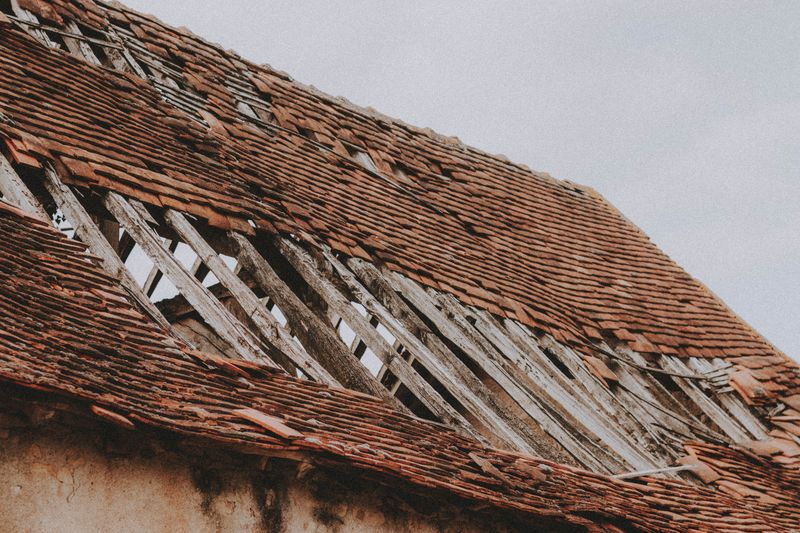
Finding roof shingles blown off in wind means the roof has lost part of its first weather barrier. Do not climb up to check it. Protect people, manage an interior drip only from a safe, dry location, take ground-level photos, and call a qualified roofer for inspection and temporary protection.
One missing shingle does not prove that the whole roof failed, reveal the wind speed, or guarantee an insurance claim. The next decision depends on what layer is exposed, whether water is entering, and whether the damage is isolated or part of a wider wind-uplift pattern.
What to do immediately
- Wait until the storm has passed. Stay away from the roof, loose debris, damaged trees, and any fallen or low wires. OSHA says to treat downed lines as energized and never approach them. Call the utility or emergency services.
- Check for unsafe building conditions. Leave the affected area if you see structural movement, major cracks, a sagging or bulging ceiling, or water near lights, outlets, wiring, or the electrical panel. FEMA advises checking for exterior damage and sagging, while the CDC recommends professional inspection before entering a visibly damaged home.
- Limit interior damage without entering danger. From a dry, stable floor, move belongings and place a container below a drip if there is no electrical or ceiling-collapse concern. Do not puncture a wet ceiling or touch wet electrical equipment.
- Photograph from the ground. Capture each visible roof slope, the missing area, fallen shingles or debris, exterior damage, and indoor water marks. Pair zoomed photos with wider views that show location.
- Request professional weather protection. Tell the roofer whether water is entering and what material appears exposed. Do not attempt improvised tarping, nailing, or roof walking; OSHA notes increased fall risk when roof integrity is uncertain.
Use the post-storm roof inspection guide for a safe perimeter and interior check. Stop if dangerous conditions exist.
What is exposed beneath the missing shingle?
DOE’s Building America Solution Center explains that when shingles blow off, the underlayment and roof sheathing may become the remaining barriers to rain. Wind-driven water can reach laps, holes, damaged material, and exposed wood.
| Ground-level observation | What it may mean | Response |
|---|---|---|
| Dark or light sheet material is visible, with no indoor water | Underlayment may still cover the deck, but the primary covering is missing | Photograph it and arrange prompt inspection before more weather arrives |
| Bare plywood or OSB is visible | The sheathing may be directly exposed to rain | Treat as urgent and request professional temporary protection |
| A hole, lifted deck edge, displaced vent, or flashing is visible | Damage may extend beyond the shingle layer | Keep clear of the area and request emergency professional assessment |
| Only part of a tab appears missing | The full shingle or seal may still be damaged beyond what a ground photo shows | Do not lift adjacent tabs; have the repair area inspected |
The gap cannot show whether underlayment tore, fasteners pulled through, or nearby seals broke. A roofer should examine the covering, deck, flashing, vents, caps, and attic-side evidence.
Active leak versus no leak
| Condition | What to do now | What not to assume |
|---|---|---|
| Water is dripping, staining is spreading, or insulation is wet | Move people and belongings away if safe, avoid electrical exposure, document it, and request emergency roof service | Do not assume a bucket solves the exterior opening |
| Ceiling is sagging or bulging | Keep everyone out from under it and call emergency or qualified building professionals | Do not drain, press, or stand beneath it |
| No indoor leak is visible | Photograph, monitor accessible interior areas, and schedule prompt inspection and protection before rain | Do not assume underlayment is intact or that water cannot track elsewhere |
| Rain is forecast before inspection | Tell the contractor that temporary weather protection is time-sensitive | Do not climb up to install a tarp yourself |
Water can enter away from the indoor stain. From a stable attic access point, photograph visible moisture without walking framing, touching wiring, or entering a compromised area.
Build a ground-level evidence record
- Record the date and time you first noticed the damage and when the storm occurred.
- Take wide photos of every visible slope, then closer images from the same safe location.
- Photograph shingles and debris on the ground before moving them; do not try to match or reinstall them.
- Note active drips, ceiling stains, wet insulation, displaced flashing, ridge-cap loss, branches, and damaged vents or gutters.
- Gather the roof contract, product name, installation date, permit, warranty, previous inspection, and repair records.
- Keep a log of insurer, contractor, and manufacturer calls, plus receipts for qualified temporary work.
Do not infer wind speed from damage. FEMA says high-wind shingle performance depends on seal condition, installation, fastener location, product selection, and roof details.
Is this an isolated repair or a broader wind pattern?
An isolated repair may be possible when the deck and underlayment are sound, adjacent shingles remain serviceable, a compatible replacement can be installed to current instructions, and the damage is limited to a small documented area. See how individual shingles are replaced to understand the professional scope, not as encouragement to access a storm-damaged roof.
A broader repair or replacement evaluation is reasonable when shingles are missing on several slopes, adjacent tabs are lifted or creased, ridge caps or vents moved, flashing or sheathing is damaged, the remaining shingles are brittle, or repeated repairs suggest a system-wide condition. Compare those findings with the signs a roof may need replacement, but do not let one missing tab become an automatic replacement verdict.
Ask the inspector for a slope diagram and supporting photos. The recommendation should separate storm damage, pre-existing wear, installation concerns, and code-required work.
Warranty and insurance documentation
Material warranty, installer workmanship warranty, and homeowners insurance are different review paths. Read the actual documents; coverage is never automatic.
If a product issue may be involved, notify the manufacturer or installer before permanent repair when conditions allow. GAF’s claims guidance, for example, may require installation and ownership proof, photos, and samples removed by an experienced roofer. It advises opening a claim and reporting when urgent repair cannot wait. Requirements vary.
For insurance, promptly ask the company what it needs before permanent work. The Texas Department of Insurance says policies differ, recommends photos before work, permits necessary temporary repairs, and advises keeping receipts and discussing permanent work with the insurer. Follow your state rules and policy; this is not a coverage promise.
Use the roof insurance claim guide to organize the claim process. If professional temporary covering is needed, the emergency roof tarping guide explains service scope and documentation without making roof access a homeowner task.
What a useful repair quote should include
Ask each contractor for the same written scope:
- affected slopes and quantities, supported by labeled photos;
- shingle manufacturer, product, color, and compatibility assumptions;
- condition of underlayment, sheathing, flashing, ridge or hip caps, and vents;
- removal and replacement steps, including damaged surrounding materials;
- temporary protection separated from permanent repair;
- permit, code, disposal, cleanup, and property-protection responsibilities;
- start timing, weather contingency, payment schedule, and change-order process;
- material and workmanship warranty terms; and
- exclusions, including concealed damage that could change the price.
Do not accept “the whole roof is wind-damaged” or “insurance will pay” without evidence. A sound quote distinguishes observations, hidden conditions, and decisions belonging to the insurer, warranty issuer, code official, or owner.
Your next-step checklist
- Everyone is clear of downed lines, loose debris, structural movement, wet electrical hazards, and sagging ceilings.
- Interior water is contained only where it is safe to do so.
- Wide and close photos show the roof, debris, exterior damage, and interior effects.
- A qualified roofer has the leak status and a request for inspection or temporary protection.
- Temporary-work photos, invoices, and receipts are saved.
- The written quote separates isolated repair, broader damage, and unconfirmed conditions.
The practical rule is simple: stay off the roof, protect people and the interior, preserve evidence, and let a qualified inspection determine whether the wind damage is local or widespread.
Sources and image credit
- DOE/PNNL Building America: Asphalt shingle roofs
- FEMA: Improving windstorm and tornado resilience
- OSHA: Reducing falls during residential roof repair
- OSHA: Working safely around downed electrical wires
- CDC: Returning home after a natural disaster
- FEMA: Safely returning to a damaged home
- Texas Department of Insurance: Homeowners insurance and disaster claims
- GAF: Residential and commercial claims
- Photo by Mathias Reding on Pexels

Shingle Science Editorial Team
Independent trade-focused editorial team