Roof cement vs roof sealant: Which repair material to use
Quick answer
Use asphalt roof cement for compatible, mostly static spot repairs such as bedding asphalt flashing or patch fabric. Use a flexible roofing sealant for narrow joints that move. Use a tested coating system only across a sound, compatible low-slope roof—not as a shortcut for failed flashing, wet insulation, or worn-out shingles.
Common questions
- Is roof cement the same as roof sealant?
- No. Roof sealant is a broad category. Roof cement is usually a thick asphalt-based mastic for patches and flashing details, while cartridge sealants use chemistries such as polyurethane, tripolymer, or silicone to form flexible beads in joints.
- Can roof sealant stop an active leak in the rain?
- Only a product specifically labeled for wet or underwater adhesion should be considered in wet conditions. Many sealants and coatings require a clean, dry, frost-free surface and a rain-free curing window. An emergency patch still does not correct rotten decking, failed flashing, trapped moisture, or a worn-out roof.
- Should roof cement be used around flashing?
- It can be appropriate for bedding or patching certain asphalt-compatible flashing details when the roof-system instructions allow it. A narrow joint that must move may need a compatible elastomeric sealant instead, while loose, rusted, missing, or incorrectly lapped flashing usually needs mechanical repair or replacement.
Source note: Reviewed against current Henry, Geocel, Gaco, Owens Corning, ARMA, and NIOSH manufacturer or industry guidance. Exact product labels and roof-system instructions control the job.
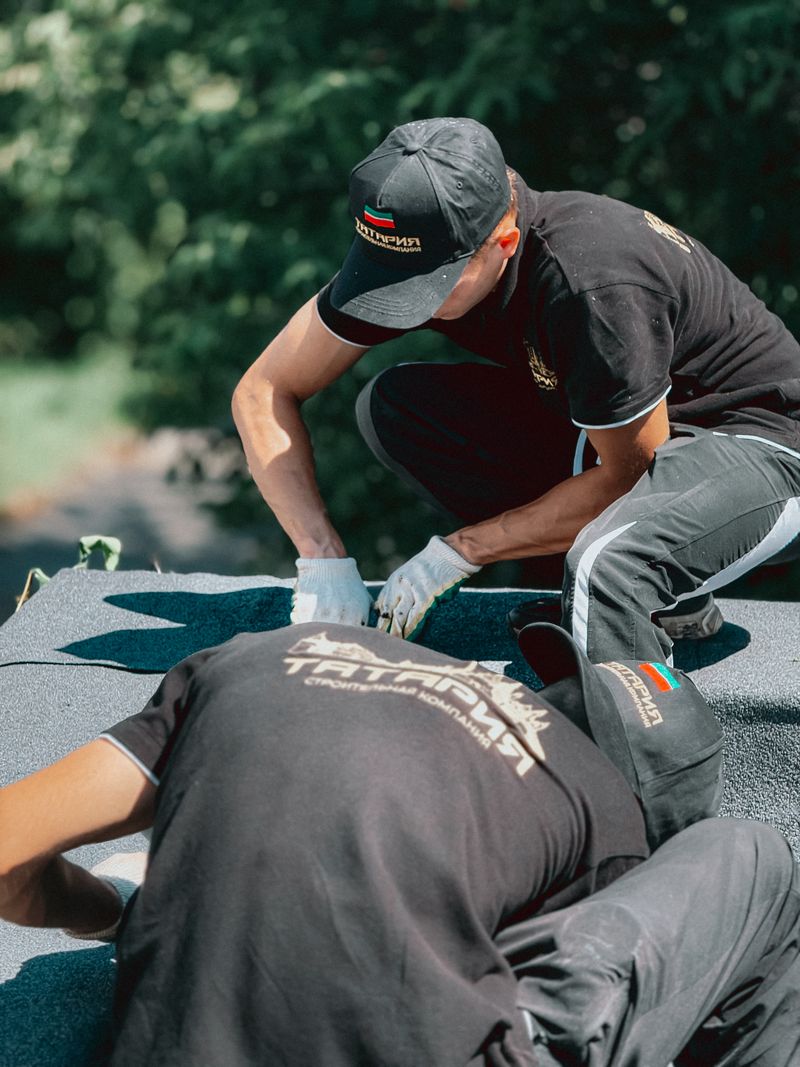
Roof cement and roof sealant are not interchangeable. Choose asphalt roof cement for a compatible, mostly static patch; choose a flexible roofing sealant for a narrow joint that expands and contracts; and reserve whole-roof coatings for sound, approved low-slope systems.
The defect decides the material. A tube or pail cannot compensate for missing flashing, rotten decking, wet insulation, open seams that require fastening, or a roof covering at the end of its service life.
Roof cement vs roof sealant at a glance
| Repair decision | Asphalt roof cement or flashing cement | Polyurethane or tripolymer sealant | Silicone roof sealant | Whole-roof coating |
|---|---|---|---|---|
| Typical job | Troweled spot patch, embedded repair fabric, or compatible flashing detail | Narrow flashing, masonry, metal, or penetration joint | UV-exposed detail, fastener, seam, or compatible membrane repair | Restoring a sound low-slope roof surface |
| Common substrates | Asphalt shingles, built-up roofing, modified bitumen, plus listed metal or masonry uses | Product-specific combinations of asphalt shingles, modified bitumen, metal, masonry, concrete, or wood | Product-specific asphalt, aged single-ply, metal, concrete, foam, or existing silicone | Approved metal, aged single-ply, foam, asphaltic, concrete, or existing coating systems |
| Wet application | Only a wet-patch grade explicitly labeled for it | Usually clean and surface dry; some products tolerate dew or dampness | Usually clean, dry, and frost-free | Dry substrate and forecast window required; trapped moisture must be addressed |
| Movement | Better for static patches than moving exposed joints | Designed to remain elastomeric in a correctly sized joint | Flexible and highly weather resistant | Moves as a continuous membrane, but cannot bridge every structural defect |
| UV exposure | Standard asphalt cement can weather when left exposed; follow the repair detail | Choose an exterior, UV-rated roofing formula | Strong UV resistance is a key advantage | Formulated for full exposure at the specified dry-film thickness |
| Best repair horizon | Emergency or durable detail depending on grade, reinforcement, exposure, and assembly | Durable maintenance joint when compatible and properly prepared | Durable exposed detail when compatible and allowed by the roof system | Roof-restoration project, not a spot-patch shortcut |
What roof cement actually is
Roof cement is a thick asphalt-based mastic, commonly sold as plastic cement, wet patch, or flashing cement. It is spread with a trowel or delivered from a cartridge, so it can fill irregular patches and embed reinforcing fabric.
“Flashing cement” may be a rubber-modified asphalt cement, but the name does not make every product suitable for every membrane, joint, or weather condition.
For example, Henry describes its 204 Plastic Roof Cement as a dry-surface product. Its 208 Wet Patch, by contrast, is labeled for wet or dry surfaces, carries ASTM D3409 wet-adhesion language, and lists a 20°F to 120°F application range. That difference is why the exact data sheet matters more than the words “roof cement” on the shelf.
Roof cement makes sense for:
- A listed asphalt-roof patch with sound material around it
- Reinforcing fabric embedded as the manufacturer directs
- Bedding an approved flashing component in an asphalt assembly
- Small dabs required by a shingle installation detail
It cannot replace torn shingles, corroded metal, a failed pipe boot, or incorrectly lapped flashing. Read our roof flashing guide before assuming a black smear is the complete repair.
When a flexible roof sealant is the better choice
A cartridge roof sealant creates a narrower bead and is usually better at a joint between materials that move differently. Relevant chemistries include polyurethane, tripolymer or hybrid sealants, and silicone.
Polyurethane and tripolymer sealants
These are common at metal-to-masonry joints, flashing seams, and penetrations when the selected product lists both substrates. Joint width, depth, backing, tooling, and adhesion matter; laying a bead over dirt or failed caulk is not joint preparation.
Geocel’s 2300 tripolymer data sheet lists asphalt shingles, modified bitumen, coated steel, concrete, vinyl, and steel. It recommends basically clean, surface-dry joints, although dew dampness is permitted; reports a 45-minute tack-free time and four-day cure; and says not to apply above a 140°F surface temperature. The solvent-containing product is exterior-only and requires adequate ventilation.
Polyurethane is not universal asphalt-roof caulk. Sika lists Sikaflex NP 1 for roofing joints on substrates including masonry, aluminum, wood, and roof tile—not asphalt shingles. Its instructions require dry, clean material free of asphalt and tar, rate joint movement at ±35%, and put full cure near one week at 75°F and 50% relative humidity.
Silicone roof sealants
Silicone is useful where sustained UV and weather exposure matter, but compatibility and future recoating need attention. Some silicone products accept only silicone or specifically approved materials over them.
Henry 884 illustrates the category: its data sheet lists uses on several existing roof types, requires a clean, dry, frost-free surface and an adhesion test, permits application from 35°F to 120°F, and rules out application if rain is expected within one hour. It is tack-free in roughly one to two hours and fully cured near 48 hours, depending on weather. The same sheet says it is not paintable and limits the remedy primarily to replacement of defective product—not a guarantee that any repair will be watertight.
For a product-oriented overview after you identify the defect, see our roof sealants and coatings guide.
A roof coating is a system, not a large bucket of sealant
A whole-roof coating is applied at a controlled coverage rate across a compatible, sound low-slope roof. It usually requires cleaning, moisture investigation, adhesion testing, detail repairs, primers or base coats where specified, and verification of wet- and dry-film thickness.
GacoFlex S42 silicone coating, for example, lists weathered single-ply, metal, foam, and certain asphaltic systems, but calls for specific primers or a bleed-blocking base coat in some assemblies. Its current product data sheet prohibits application below 32°F or above 120°F, requires at least a one-hour rain window, and calls for 24 to 48 hours before light foot traffic. Warranted systems add substrate, applicator, preparation, and thickness requirements.
Do not roll coating over:
- Wet insulation, active blisters, rot, or an unsound membrane
- Open seams or fasteners that require mechanical correction
- A roof whose drainage or structural movement exceeds the system design
- Asphalt shingles unless the shingle manufacturer expressly approves it
The Asphalt Roofing Manufacturers Association advises against field-applied coatings over installed asphalt shingles because they can affect shingle shape, granules, moisture behavior, and tested roof-system characteristics. Compare coating chemistries only after confirming the roof is a candidate in our silicone vs acrylic roof coating guide.
If reflectivity and cooling demand are part of the restoration decision, compare current ratings and building-specific limits in our cool roof coatings and energy savings guide.
Match the material to the defect
Use this sequence before buying anything:
- Identify the water entry point. Interior stains can be downhill from the actual defect. Follow the diagnostic steps in how to find a hidden roof leak.
- Name the failed component. Is it a shingle, membrane seam, flashing joint, fastener, pipe boot, coating, deck, or drainage detail?
- Record every substrate. A bead may touch asphalt, painted metal, masonry, plastic, or an existing sealant. All must be compatible.
- Estimate movement and exposure. A wide moving joint in full sun needs different behavior than an embedded static patch.
- Check conditions and cure. Compare surface moisture, frost, dew point, ambient and substrate temperature, rain window, and time before traffic or recoating.
- Read both warranties. Check the repair-product warranty and the existing roof-system warranty before applying anything.
If the defect is widespread, repeatedly patched, soft, structurally damaged, or tied to an aging roof, compare repair versus replacement or request a professional scope.
Safety and application boundaries
Do not treat a small tube as permission to climb. Roof and ladder falls remain a leading construction hazard, and wet, icy, steep, fragile, or damaged roofs amplify the risk. Inspect from the ground, attic, or a safe window when possible; qualified roofers should plan access and use the fall protection the work requires.
Also read the current safety data sheet. Asphalt mastics and some sealants contain solvents or emit vapors while curing. Keep them away from ignition sources, provide the specified ventilation, use required skin and eye protection, and do not mix cleanup solvents or coatings that the manufacturer has not approved.
The bottom line
Choose by defect, substrate, movement, exposure, and application conditions. Roof cement fills and reinforces compatible asphalt-oriented spot repairs. Elastomeric cartridge sealants handle properly designed moving joints. Coatings restore qualifying roof surfaces as complete systems.
If the assembly is unsound or the correct water-shedding detail is missing, replacement or professional repair is the durable answer. Document the defect, download the exact technical and safety data sheets, and make the repair scope match the roof—not the marketing on the pail.
Sources and image credit
- Henry: 204 Plastic Roof Cement
- Henry: 208 Wet Patch Roof Leak Repair
- Geocel: 2300 Tripolymer Sealant technical data
- Sika: Sikaflex NP 1 polyurethane sealant
- Henry: 884 Tropi-Cool Silicone Roof Sealant technical data
- Gaco: S42 Silicone Roof Coating product data
- ARMA: Coating of Asphalt Shingles After Installation
- Owens Corning: Supreme Shingles installation instructions
- NIOSH: Construction Falls—Progress and Prevention
- Photo by Bulat843 on Pexels

Shingle Science Editorial Team
Independent trade-focused editorial team