How to choose the right roof color for your home
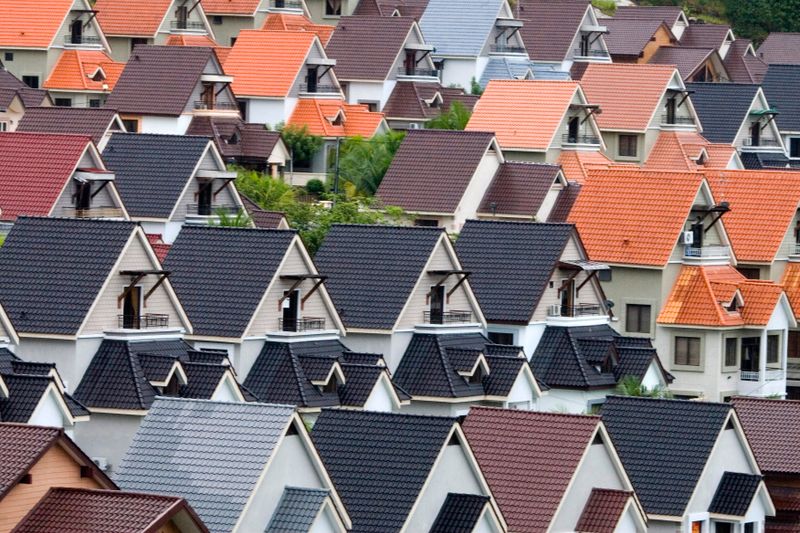
Choosing a roof color is one of the most permanent decisions you’ll make about your home’s appearance. A typical asphalt shingle roof lasts 20–30 years, and you’ll be looking at whatever color you pick every day for most of that time. Unlike paint, you can’t easily change it if you decide you got it wrong.
The good news: roof color selection doesn’t have to be a guessing game. There are clear principles that help narrow your options quickly, and tools that let you preview how different colors will look on your specific home before you commit.
Why roof color matters more than most homeowners think
Beyond aesthetics, roof color has measurable practical consequences:
- Energy costs. Dark roofs absorb significantly more solar heat than light roofs. In hot climates, a dark roof can increase attic temperatures by 20–40°F and push cooling costs noticeably higher. In cold climates, that absorbed heat can actually help.
- Resale value. Real estate agents consistently cite curb appeal as one of the top factors affecting sale speed and price. Roof color is the most visible element of curb appeal from the street.
- HOA compliance. Many homeowners associations have approved color lists or style guidelines. Choosing outside those boundaries means rejection and a re-order, costing weeks and money.
- Resale marketability. Unusual or highly personal color choices can reduce your buyer pool when it’s time to sell.
Getting this decision right is worth the time it takes.
Start with your home’s fixed elements
Your roof color needs to coordinate with things you’re almost certainly not changing at the same time: siding, brick, stone, and trim. These fixed elements set your palette range before you look at a single shingle sample.
Identify your home’s primary exterior color. If your siding is red brick, warm tones (brown, tan, terracotta, charcoal) will read as intentional. Cool grays or blues will clash. If you have gray or white siding, you have the most flexibility — almost any roof color can work if the saturation level is right.
Note your trim and accent colors. A home with black window frames and white trim reads very differently from one with brown shutters and tan trim. Your roof color should complement the full package, not just the siding.
Identify your home’s architectural style. Colonial homes tend toward slate grays and blacks. Craftsman bungalows often look best with earthy browns and greens. Mediterranean and Spanish-style homes typically use barrel tile in terra cotta or warm neutrals. Ranch homes are forgiving and accept most color families.
Light vs dark roof colors: the energy efficiency tradeoff
This is the factor most homeowners underweight, and it has real financial consequences over a 25-year roof life.
Dark roofs (black, dark gray, dark brown):
- Absorb more solar radiation and convert it to heat
- Can increase attic temperatures by 20–40°F on a hot day
- Drive higher air conditioning loads in summer
- Can help melt snow and ice in cold climates
- Tend to look more traditional and formal
- Show less algae staining over time in humid climates
Light and medium roofs (light gray, tan, cream, white):
- Reflect more solar energy
- Keep attics significantly cooler in summer
- Can reduce cooling costs by 10–20% in hot climates
- Tend to show algae streaking more visibly over time
- Can look dated or institutional if the wrong shade is chosen for the home style
The practical rule: If you live in USDA climate zones 1–5 (most of the South, Southwest, and warm coastal areas), lean light. If you’re in zones 6–8 (Northeast, Midwest, Pacific Northwest), dark and medium tones are a reasonable choice on energy grounds, and you may benefit from the solar heat gain in winter.
For a detailed breakdown of the science behind cool roofing, see our guide on cool roof coatings and energy savings.
Popular roof color options by material
Not every color is available in every material. Here’s what to expect:
Asphalt shingles
The widest color selection of any roofing material. Major manufacturers like GAF, Owens Corning, and CertainTeed offer dozens of options across every color family:
- Charcoal and graphite: The best-selling shingle color in the U.S. Works with almost any home exterior. Hides aging and algae staining well.
- Weathered wood (brown/gray blend): The second most popular choice. Reads as warm and natural, pairs well with brick and stone exteriors.
- Driftwood and tan: Good choice for homes with cream, beige, or tan siding. More forgiving in hot climates than dark options.
- Black: Strong visual contrast. Works well on modern, colonial, and Tudor-style homes. Hot climate penalty is significant.
- Estate gray and pewter: Good middle-ground options between charcoal and light gray. Popular with blue-gray, white, and greige siding.
- Colonial slate: Cooler-toned than charcoal. Works particularly well with colonial, cape cod, and traditional New England architecture.
For a detailed breakdown of manufacturer options, see our guide to the best asphalt shingle brands.
Metal roofing
Metal roofing often comes with factory-applied coatings in a wider range of colors than asphalt, including options that aren’t typically available in shingles:
- Classic galvanized gray and Galvalume are popular for modern and agricultural-influenced architecture
- Standing seam metal in dark bronze or dark green is a premium look common in high-end residential construction
- Metal roofing in PVDF (polyvinylidene fluoride) coatings holds color significantly longer than asphalt and resists fading
See our asphalt shingles vs metal roofing comparison for more on how the materials differ.
Tile (clay and concrete)
Tile colors are more constrained than asphalt or metal, but that’s partly by design — tile roofing has strong regional identity:
- Terra cotta and adobe tones are traditional in the Southwest and Florida
- Buff and cream tile reads well in Mediterranean-influenced architecture
- Gray concrete tile works in a wider range of climates and styles
- Avoid tile that looks too clean or uniform — weathered, blended tile that mixes tones reads as higher quality
How to test before you commit
Never choose a roof color from a small sample card in a showroom. Colors look dramatically different at scale, in outdoor light, and against your specific home.
Order large samples or sample boards. Most roofing manufacturers offer sample boards (typically 12”x12” or larger) that show the actual product in proper scale. Owens Corning’s TruDefinition line and GAF’s Designer Shingles both offer samples you can request through authorized dealers.
Use a roof visualizer tool. All major shingle manufacturers offer free online tools that let you upload a photo of your home and preview different colors:
- GAF’s Virtual Home Remodeler
- Owens Corning’s Roof Visualizer
- CertainTeed’s ColorView
These are rough approximations, but they’re good for eliminating obvious mismatches and getting a directional sense of how a color will read on your home’s proportions.
Look at it in multiple lighting conditions. A sample that looks great in morning light may look muddy at midday or washed out in overcast weather. Look at samples at different times of day and in both sun and shade.
Drive your neighborhood. Look at roofs on homes similar in style and exterior color to yours. Note what works and what doesn’t. Actual examples at full scale in your lighting environment are more informative than any showroom display.
HOA rules and local building codes
If you live in an HOA community, check the requirements before you spend time on color research. Most HOAs with roofing requirements will have:
- An approved color list or palette
- A style requirement (e.g., architectural shingles only, no 3-tab)
- A submission and approval process for new roof color selections
Some municipalities also have design guidelines, particularly in historic districts or planned communities. Your roofing contractor should know local requirements, but verify independently before ordering materials.
The resale value question
There isn’t a single “best” roof color for resale value — but there are principles that apply broadly:
Neutral colors sell more easily than personal choices. Charcoal, gray, tan, and brown are safe for resale. Bright red, green, or blue may appeal strongly to some buyers and alienate others.
Coordinate with the home’s exterior. A roof that’s visibly mismatched with the siding reads as neglected or as a rushed decision, regardless of how new it is.
Consider the neighborhood context. A roof that stands out dramatically from the neighborhood reads as an eyesore to some buyers. A roof that blends with the street creates a sense of belonging that appeals to most buyers.
Avoid what’s trendy now. Trends in roofing color move slowly, but anything that feels very “of the moment” may feel dated by the time you’re selling.
What roofing contractors can and can’t tell you
A good roofing contractor can tell you what colors are available in the product lines they carry, what’s popular in your area, and what your HOA allows. They can also help you get samples and sometimes loan you display boards to take home.
What they can’t reliably tell you is what will look best on your specific home. That judgment is yours to make. Take the time to get samples, use the visualizer tools, look at comparable homes in person, and consult with neighbors or a real estate agent before finalizing your choice.
If you’re also deciding between replacing your roof now versus waiting, see our guide on the best time to replace a roof — the timing decision affects both cost and contractor availability.
Key takeaways
- Roof color is a 20–30 year decision — it deserves more research time than most homeowners give it
- Start with your fixed exterior elements (siding, brick, trim) and eliminate colors that won’t coordinate
- In hot climates, lighter roof colors can meaningfully reduce cooling costs; in cold climates, darker tones are a reasonable choice
- Charcoal and weathered wood tones are the most popular and broadly applicable choices for asphalt shingles
- Always test large samples against your actual home in outdoor light before ordering — showroom cards are unreliable at scale
- Check HOA requirements before you begin color selection, not after
- For resale, neutral and coordinated choices outperform strongly personal ones
The most common mistake homeowners make is choosing too quickly under pressure from a roofing crew that’s ready to start. Take the time to get this right — you’ll live with the result for decades.

Shingle Science Editorial Team
Independent trade-focused editorial team