Cedar Shakes vs Cedar Shingles: What's the Difference?
Cedar roofing has been sheltering American homes for centuries, and for good reason. Its natural beauty, insulating properties, and durability make it one of the most appealing roofing choices available — but walking into a lumber yard or talking to a roofing contractor can leave you confused fast. Are cedar shakes and cedar shingles the same thing? Not quite. The differences matter for your budget, your local building code, and the long-term performance of your roof.
The Core Difference: How They’re Made
The single most important distinction between cedar shakes and cedar shingles comes down to how they’re produced.
Cedar shingles are sawn on both sides by a machine. The result is a smooth, uniform, tapered piece of wood — thin at the butt and thicker toward the top where it laps over the course below. Because they’re machine-cut, shingles are consistent in thickness and shape from piece to piece.
Cedar shakes are split from the wood rather than sawn, at least on one face. The splitting process follows the natural grain of the wood, producing an irregular, deeply textured surface. There are three types you’ll encounter:
- Hand-split and re-sawn shakes — split on the face, sawn on the back. This is the most common shake type.
- Tapersplit shakes — entirely hand-split, producing a natural taper. Rarely used today.
- Straight-split (barn shakes) — split but not tapered, giving a uniform thickness. Used mostly on walls.
The rough, rustic texture of shakes is immediately recognizable. If you’ve seen a mountain cabin with a dramatically weathered roof that looks almost sculptural, that’s almost certainly hand-split cedar shakes.
Appearance and Aesthetics
Both materials age to a beautiful silver-gray if left untreated, or they can be preserved in their original honey-brown tone with regular staining. But the visual character of the two products is quite different.
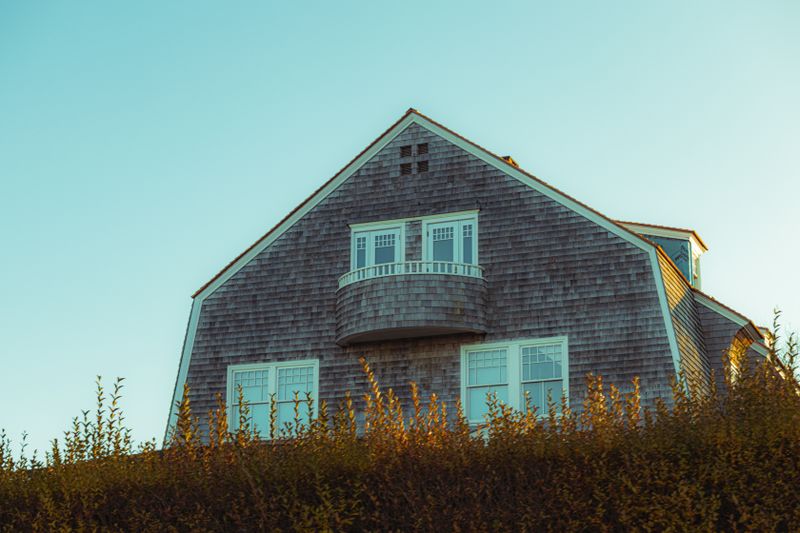
Shingles produce a more refined, clean-lined appearance. The smooth, consistent surfaces create a tighter shadow line and a more orderly pattern. They suit traditional New England colonials, craftsman bungalows, and cottage-style homes well.
Shakes deliver bold texture and shadow depth. Their rough faces and irregular profiles give a roof a three-dimensional, organic quality that’s hard to replicate with any other material. They’re a natural fit for rustic, mountain, Pacific Northwest, or Tudor-style architecture.
Thickness matters aesthetically too. Standard cedar shingles taper from about 3/8 inch to 5/16 inch at the butt. Shakes are considerably thicker — typically 3/4 inch to 1-1/4 inch at the butt — which creates far more pronounced shadow lines at the exposure.
Installation Method
Installing cedar shingles or shakes isn’t a project for a weekend warrior. Both require a skilled installer, but there are meaningful differences in technique.
Cedar shingles are typically installed over solid sheathing or over skip sheathing (spaced boards that allow airflow). A standard exposure for 16-inch shingles on a 4:12 pitch roof is 5 inches. They install flat, lying relatively tight against each other with a small gap (about 1/8 to 1/4 inch) between adjacent pieces to allow for expansion.
Cedar shakes require an interlayment — typically 18-inch-wide strips of 30-lb roofing felt laid between each course and extending beyond the butt of the next course. This felt layer provides a secondary moisture barrier since shakes’ rough surfaces and thickness make them more prone to holding moisture. Shakes are installed over spaced sheathing or a proprietary ventilating mat to promote airflow.
The interlayment requirement adds material and labor cost to shake installations. Expect shakes to run $1,000–$2,500 more than shingles on a typical home purely from installation complexity.
Fire Ratings: Class A, B, and C
This is where cedar roofing gets complicated — and where local building codes make all the difference.
Untreated cedar is a combustible material. Raw cedar shingles typically rate as Class C, which offers only slight fire resistance. Raw cedar shakes, due to their greater thickness, may also fall in Class C, or may not carry a rating at all.
Class ratings explained:
- Class A — Best protection. Can withstand severe fire exposure. Required in many high fire-risk areas of California, Colorado, and other western states.
- Class B — Moderate fire resistance. Withstands moderate exposure.
- Class C — Light protection. Effective against light fire exposure.
The good news: pressure-impregnated fire-retardant treatment (FRTW) can bring cedar products up to Class A or Class B. Several manufacturers sell pre-treated cedar shingles and shakes that carry Class A ratings out of the box. These products cost more — roughly 20–35% above untreated material — but they open up markets where untreated cedar is outright banned.
If you’re in a wildland-urban interface zone or a municipality with strict fire codes, verify the required rating before specifying any cedar roofing. Many jurisdictions in the western U.S. require Class A for all new roof installations.
Lifespan
Properly installed and maintained, cedar roofing lasts 25–35 years in most climates. Some cedar shingle roofs in damp Pacific Northwest climates have lasted 50 years or more with diligent maintenance.
Factors that shorten cedar roof life:
- Moss and algae growth that retain moisture
- Debris accumulation in valleys and at walls
- Infrequent cleaning and treatment
- Poor attic ventilation (moisture from below)
- Exposure to coastal salt air
Factors that extend cedar roof life:
- Regular application of wood preservative or penetrating oil (every 3–5 years)
- Annual cleaning to remove debris
- Prompt replacement of split or cracked pieces
- Good attic ventilation to keep the underside of the deck dry
Shakes, because of their greater thickness, tend to outlast shingles by 3–5 years in comparable conditions. However, their rough surfaces also trap more debris and moss — so they require slightly more maintenance attention.
Maintenance Requirements
Cedar roofing demands more active maintenance than asphalt or metal. This is the biggest drawback for many homeowners.
Cleaning should happen every 1–3 years depending on your climate and tree coverage. Soft washing with a diluted sodium hypochlorite or oxygen bleach solution removes moss, algae, and mildew without damaging wood fibers. Pressure washing can work but must be done carefully — too high a pressure strips the wood’s surface and shortens lifespan.
Treatment products fall into several categories:
- Penetrating wood oils (linseed-based or tung oil blends) nourish the wood and restore suppleness. Products like TWP (Total Wood Preservative) or Cabot Australian Timber Oil are popular choices.
- Wood preservatives with fungicide and mildewcide additives protect against biological growth. Copper naphthenate is widely used in professional applications.
- Water repellent sealers create a surface barrier. These work well short-term but can trap moisture if the wood is already damp when applied.
Plan to treat cedar roofing every 3–5 years. On a 2,000 sq ft roof, a professional treatment runs $800–$1,500 depending on your region and the product used. DIY treatment is possible but requires proper safety equipment, careful application technique, and ideal weather conditions (dry, mild temperatures, no rain for 24–48 hours after application).
Regional Building Codes
Building codes vary significantly by jurisdiction, and cedar roofing is one area where local rules can override your preferences entirely.
- California (WUI zones): Class A fire rating required in most high-fire-hazard severity zones. Untreated cedar is prohibited. Pre-treated Class A shakes and shingles are permitted in many areas.
- Colorado Front Range: Many municipalities require Class A or Class B roofing. Denver and Colorado Springs have specific restrictions.
- Florida: Wind resistance is the primary concern. Cedar must meet Miami-Dade County product approval in South Florida.
- Pacific Northwest: Generally permissive on cedar roofing; primary code concerns are ventilation and decay resistance.
- Northeast: No widespread bans, but ice-and-water shield requirements under the first 3 feet of eave complicate installation details.
Always pull the local code and, if possible, call your building department directly before committing to cedar. Some homeowners’ associations also prohibit wood roofing regardless of local code.
Cost Comparison
| Material | Material Cost (per square) | Installed Cost (per square) | Lifespan |
|---|---|---|---|
| Cedar shingles (untreated) | $130–$200 | $400–$650 | 25–30 years |
| Cedar shingles (Class A treated) | $180–$260 | $480–$720 | 25–30 years |
| Cedar shakes (untreated) | $160–$240 | $450–$750 | 28–35 years |
| Cedar shakes (Class A treated) | $220–$300 | $530–$850 | 28–35 years |
On a 25-square (2,500 sq ft) roof, total installed cost typically runs $10,000–$18,000 for cedar shingles and $11,000–$21,000 for cedar shakes. These figures vary widely by region — labor is significantly more expensive in coastal markets and the Pacific Northwest.
Which Should You Choose?
Choose cedar shingles if:
- You want a cleaner, more refined look
- Your budget is tighter
- Your roof has complex geometry with lots of cuts
- Your local code requires Class A and you want the most affordable treated option
Choose cedar shakes if:
- Rustic, bold texture is your priority
- Your home’s architecture suits the dramatic shadow lines
- You’re in a climate where the extra thickness provides meaningful thermal benefit
- You’re comfortable with slightly higher upfront cost and maintenance
Both products represent a genuine investment in your home’s character and performance. Cedar roofing adds measurable curb appeal and has a proven track record spanning generations. The key is going in with clear expectations about maintenance and making sure your choice is fully code-compliant for your specific location.

ShingleScience Team
Roofing Contractor & Founder of ShingleScience