Attic condensation vs roof leak: How to tell
Quick answer
Attic condensation often appears broadly on cold sheathing or fasteners during winter and may worsen with indoor humidity. Roof leaks more often track with rain or snowmelt and concentrate near penetrations, flashing, damaged covering, or water paths. Both can occur together.
Common questions
- Why is there frost on attic nail tips?
- Metal fasteners can be among the coldest attic surfaces. Moist indoor air that reaches them may condense and freeze, making widespread nail-tip frost a useful condensation clue rather than proof of a roof-cover leak.
- Can attic condensation look like a roof leak?
- Yes. Frost or moisture can accumulate in cold weather and drip when temperatures rise. The resulting stains may resemble rain leakage, so timing and distribution matter.
- Who should inspect attic moisture?
- A roofer can evaluate the roof covering and flashing, while a qualified home-performance or building-envelope professional can assess air leakage, insulation, ventilation, humidity, and exhaust ducts. Structural damage or suspected electrical hazards require appropriate specialists.
Source note: Reviewed against U.S. Department of Energy durable-attic guidance, Building Science Corporation moisture-control resources, and GAF roof-deck guidance.
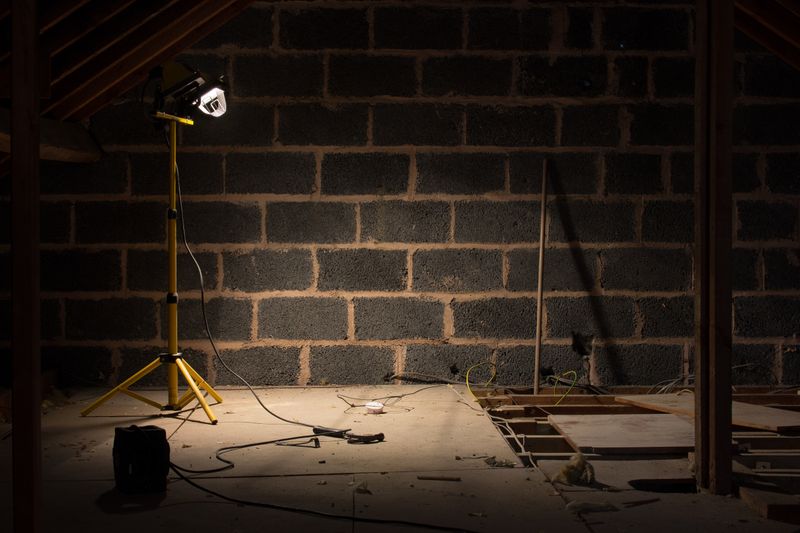
Water on attic sheathing does not automatically mean rain came through the roof. In cold weather, warm indoor air can reach the underside of the deck, condense, freeze, and later drip during a thaw. A flashing leak can produce a similar stain—and both problems can exist at once.
The most useful clues are timing, distribution, and the path moisture follows. Use this checklist to organize observations safely before calling the right professional.
Quick comparison: condensation or roof leak?
| Clue | More consistent with attic condensation | More consistent with roof leak |
|---|---|---|
| Timing | Cold snaps, high indoor humidity, then dripping during a thaw | Rain, wind-driven rain, snowmelt, or ice-dam conditions |
| Distribution | Broad frost, dampness, or darkening across cold sheathing | Localized wet path below a penetration, valley, flashing, or roof defect |
| Fasteners | Many nail tips frosted or wet across an area | One concentrated stain following a particular fastener or opening |
| Insulation | Diffuse dampness below broad deck area or air-leak site | A wet patch or channel below the entry path |
| Exhaust ducts | Disconnected, leaky, uninsulated, or terminating in attic | Usually unrelated unless the roof cap or flashing leaks |
| Interior conditions | Cooking, showers, humidifier use, air leakage, poor exhaust | Interior humidity may not change the symptom |
These patterns guide investigation; they do not replace an on-site diagnosis.
Start with seasonality
Write down when the moisture appears.
Condensation often follows cold weather
Warm air can carry moisture through ceiling gaps around attic hatches, wiring, plumbing, recessed fixtures, and partition tops. When that air reaches cold sheathing or metal, water vapor can condense. Building Science Corporation documents that frost may appear first on roof-sheathing nails because they are especially cold. See the attic moisture discussion.
A sudden “leak” during a sunny thaw can therefore be melted frost rather than new rain entry. Check recent outdoor temperatures and indoor humidity alongside the drip time.
Roof leaks follow water exposure
Leaks more often track with rain, wind direction, snowmelt, or ice-dam backup. Wind-driven rain may affect one roof-wall junction only under a particular storm direction. Ice dams can force water beneath the roof covering at eaves even when precipitation has stopped.
Use our ice dam prevention guide if the moisture clusters near eaves after snow and freeze-thaw cycles.
Look at the pattern, not only the darkest stain
Water moves along rafters, deck joints, fasteners, wiring, and insulation. The darkest interior stain may be downstream from the source.
Patterns that support condensation
- Frost or dampness across many fastener tips
- Broad sheathing darkening rather than one entry point
- Moisture concentrated above ceiling air leaks
- Similar conditions on several roof planes
- Musty odor that worsens through the heating season
- Improvement when indoor humidity falls
Patterns that support roof leakage
- A defined path below a chimney, sidewall, skylight, valley, vent, or pipe boot
- Fresh staining after rain on the same wind-facing slope
- Water below missing, lifted, or punctured roof covering
- A localized wet deck joint or rafter channel
- Damage or gaps visible from the ground at flashing or penetrations
For a broader water-path investigation, use the sequence in our hidden roof leak detection guide. This article stays focused on separating moisture mechanisms.
Check frost and fasteners safely
From a stable attic walkway or platform, use a flashlight to scan the underside of the deck. Do not step between joists or onto unsupported insulation. Avoid contact with wiring, wet electrical equipment, mold-like growth, or structurally soft material.
Photograph:
- Frost on many nail tips
- Frost lines at deck seams
- Damp or dark sheathing areas
- Drips forming as the attic warms
- Any single fastener with a concentrated water trail
Widespread nail-tip frost points toward moist air meeting cold metal. One trail does not prove an exterior nail leak; relate it to weather timing and the surrounding pattern.
Read wet-insulation patterns
The U.S. Department of Energy lists wet attic insulation, mold or mildew, warped or rotting wood, and worn roof-edge materials among possible water-intrusion signs. Read DOE’s Guide to Durable Attics.
Without compressing or disturbing insulation, note:
- Whether the wetness is localized or spread broadly
- The nearest penetration, wall, valley, or eave
- Whether the insulation is below an attic air-leak site
- Whether water appears to have dripped from above or wicked sideways
- Whether the material is merely cool or actually wet
Wet insulation loses performance and can conceal ceiling damage. Do not close the attic or add insulation until the moisture source and drying plan are addressed.
Inspect penetrations and flashing clues
Roof leaks often concentrate where the water-shedding system changes. From inside, trace localized staining upslope toward:
- Plumbing vent pipes
- Bathroom or kitchen exhaust roof caps
- Chimneys and masonry intersections
- Skylights
- Roof-wall transitions
- Valleys
- Satellite, solar, or mechanical attachments
From the ground, look for displaced flashing, missing shingles, debris damage, or open seals. A roofer can inspect the exterior detail using safe access. Our roof flashing guide explains the components without turning this into an unsafe roof-access task.
Confirm where exhaust ducts terminate
Bathroom, kitchen, and dryer exhaust should not dump moist air into an attic. DOE calls attic termination a major moisture source and recommends correcting it, subject to applicable code and professional guidance. The duct should run to an appropriate exterior termination, not stop near a soffit or lie loose on insulation.
Look from a stable location for:
- A disconnected duct
- An open duct ending inside the attic
- Gaps at duct joints
- Sagging flexible duct that may collect condensate
- Condensation on an uninsulated duct in cold space
- A roof or wall cap connection that appears incomplete
Do not assume adding roof vents will solve a leaking duct or ceiling air bypass. Air sealing, exhaust correction, insulation, and ventilation are different controls. See our roof ventilation guide for system design and common short-circuiting mistakes.
A safe diagnostic checklist
- Protect the room below. Move belongings, place a container, and avoid wet electrical fixtures.
- Record timing. Note rain, wind, snow, thaw, outdoor temperature, and indoor humidity.
- Photograph before touching. Capture wide attic views and close moisture patterns.
- Compare distribution. Broad cold-surface moisture suggests condensation; a defined path suggests leakage.
- Check exhaust routing. Confirm ducts connect to exterior terminations.
- Look for air-leak sites. Attic hatches and ceiling penetrations are common pathways, but electrical and combustion-safety work needs qualified trades.
- Get the correct inspection. A roofer evaluates covering and flashing; a home-performance or enclosure professional evaluates humidity, air leakage, insulation, and ventilation.
When to escalate immediately
Call for urgent help if you find active water near wiring or fixtures, sagging ceilings, heavy saturation, structurally soft decking, a roof opening, or water entering during a storm. Keep people away from the affected area and do not enter an attic without safe access.
Persistent moisture can decay sheathing. GAF identifies leaks and attic condensation as moisture sources associated with deck rot. Review the GAF deck-rot guidance, then use our decking replacement cost guide if damaged panels are discovered.
The bottom line
Condensation is more likely when moisture is broad, tied to cold weather or indoor humidity, and visible as frost across fasteners or sheathing. A roof leak is more likely when wetting follows precipitation and traces toward a specific penetration, flashing detail, or roof-cover defect.
Do not diagnose from one stain. Record weather and indoor conditions, map the moisture pattern, verify exhaust routing, and have the roof and building enclosure evaluated when the evidence is mixed. Correcting the wrong mechanism wastes money and leaves the attic vulnerable.
Sources and image credit

Shingle Science Editorial Team
Independent trade-focused editorial team