Asphalt shingle granule loss: Normal shedding vs damage
Quick answer
Loose granules are often normal soon after a new asphalt roof is installed. Uneven bare patches, exposed asphalt, persistent heavy shedding, bruises, creases, or storm-related collateral damage deserve a qualified roof inspection.
Common questions
- Is granule loss normal on a new roof?
- Some loose manufacturing granules commonly wash into gutters after installation and should decrease over the following months. Persistent heavy loss, visible color change, or other damage should be reviewed by the installer or manufacturer.
- Do granules in the gutter mean I need a new roof?
- Not by themselves. Consider the roof's age, whether shedding is decreasing or increasing, and whether the shingles have bare spots, cracks, curling, bruises, or active leaks.
- Can a photo prove hail damage?
- No. Photos document conditions, but hail assessment also considers random impact patterns, bruising, collateral marks, roof age, weather history, and look-alike conditions.
Source note: Reviewed against GAF technical bulletins, IBHS asphalt-shingle research, and OSHA roofing-safety guidance.
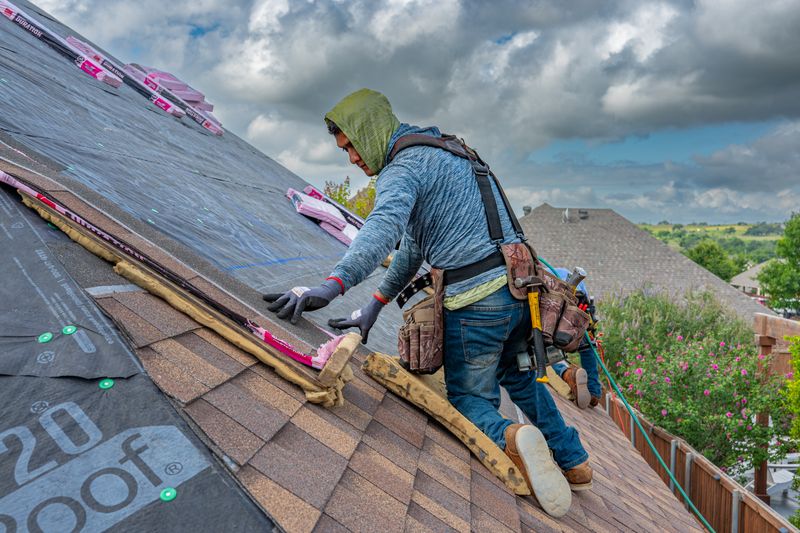
Finding sand-like grit in a gutter can make a new roof look defective and an older roof look finished. Neither conclusion is automatic. The pattern, timing, and condition of the shingles matter more than one handful of granules.
This guide separates normal new-roof shedding from age, foot-traffic, wind, and hail damage. Most checks can be made from the ground or attic; do not walk a steep, wet, hot, icy, or visibly damaged roof to investigate.
What asphalt shingle granules do
Mineral granules are not decoration alone. They color the roof and shield the asphalt layer from ultraviolet exposure. IBHS describes an asphalt shingle as a system of granules, asphalt, fiberglass mat, and sealant; damage can displace granules, deform the shingle, or breach it. See the IBHS asphalt-shingle overview.
A few loose granules do not mean the protective surface has failed. Concern rises when loss leaves the asphalt coating visibly exposed or accompanies cracks, punctures, bruising, lifted tabs, or leaks.
Quick comparison: normal shedding or damage?
| Observation | More consistent with | Best next step |
|---|---|---|
| Loose granules soon after installation, decreasing over time | Manufacturing excess | Photograph and monitor from the ground |
| Similar light wear across an older roof | Normal aging | Add it to your next professional inspection |
| Bare or dark patches in concentrated areas | Surface damage or advanced wear | Request a roofer’s close inspection |
| Scuffed tracks below equipment or across access paths | Foot traffic or service work | Document the path and limit access |
| Creased, lifted, or missing tabs after high wind | Wind damage | Arrange prompt inspection and weatherproofing |
| Random impact marks plus dents on metal components | Possible hail damage | Document collateral evidence and obtain an independent inspection |
This is a screening table, not a roof diagnosis. Multiple causes can exist on the same slope.
Normal granule loss on a new roof
Manufacturing uses extra loose granules—sometimes called rider, hitchhiker, or sleeper granules—to help ensure proper embedment in the asphalt coating. GAF says these excess granules commonly shed most heavily just after installation and gradually decrease; that condition alone is not considered a manufacturing defect. Read GAF’s granule-loss technical bulletin.
On a recently installed roof, take these practical steps:
- Record the installation date and shingle product.
- Photograph granules at the same downspout after comparable rain events.
- Use binoculars to look for color change or exposed asphalt without climbing.
- Contact the installer if heavy shedding does not trend downward over the following months.
The manufacturer-specific warranty and installation documents control. GAF advises contacting warranty services when significant loss persists after several months, the roof changes color, or other damage appears. Keep your contract, product wrapper information, and dated photos with the records described in our roofing warranty guide.
Granule loss from aging
Asphalt shingles weather over time. Sun, temperature cycling, rain, and ordinary exposure gradually loosen surface granules. Aging usually appears as a broad trend rather than a fresh group of sharply defined impact marks.
Signs that aging is becoming a service-life problem include:
- Thin-looking coverage or widespread dark asphalt exposure
- Increasing grit at downspouts over successive seasons
- Curling, cracking, brittleness, or broken corners
- Repeated tab repairs or leaks on different roof areas
- Uneven wear on the south- or west-facing slopes with the greatest sun exposure
Age alone does not set the replacement date. Compare the surface condition, repair history, attic evidence, and remaining serviceability using our guide to how long a roof lasts.
Foot traffic and mechanical scuffing
Walking, sliding tools, dragging hoses, cleaning, or servicing rooftop equipment can crush or scrape granules. Traffic damage often follows a route: near a ladder landing, below a chimney, around a satellite dish, or between roof penetrations.
Heat makes asphalt shingles more vulnerable to scuffing. Do not climb up to confirm the marks. OSHA notes that even experienced reroofing crews face fall hazards from uneven sheathing, gusts, loose material, and slick surfaces. Review OSHA’s reroofing safety guidance.
Ask service contractors how they will protect the roof surface and where they accessed it. Ground photos taken before and after HVAC, chimney, solar, or gutter work can help distinguish new scuffing from older wear.
Wind-related granule loss
High wind can lift tabs, break sealant bonds, crease shingles, or drive debris across the surface. Granule loss associated with wind is more persuasive when it occurs beside:
- Creased or folded tabs
- Missing shingle pieces
- Broken seal strips or raised edges
- Punctures from branches or windborne debris
- Fresh damage at exposed rakes, eaves, hips, or ridges
Do not press a lifted tab back down and assume the roof is sound. A creased shingle may have a weakened mat even if it lies flat later. Follow the safe exterior and attic sequence in our post-storm roof inspection guide.
Hail patterns and look-alikes
Hail is not identified by granule loss alone. IBHS warns that blisters, manufacturing imperfections, mechanical marks, and general edge wear can resemble hail. More persuasive hail evidence includes a random pattern, bruising at impacts, vulnerable ridge-cap hits, and collateral marks on flashing, gutters, vents, or air-conditioning fins. See the IBHS hail look-alikes guide.
Spatter marks show that hail may have cleaned oxidation or dirt from a surface, but IBHS notes that spatter itself is not damage. For a fuller comparison, read roof blistering vs hail damage before making a claim decision.
A safe granule-loss inspection
Use this order and stop if you find an urgent condition:
- Start inside. Look for active drips, damp insulation, stains, or sagging material.
- Walk the ground perimeter. Check downspouts, gutters visible from windows, and splash blocks.
- Use binoculars or a zoom camera. Photograph each roof plane from consistent angles.
- Note recent events. Record installation, storms, tree work, and rooftop service dates.
- Compare patterns. Separate uniform aging from paths, creases, bare spots, and random impacts.
- Call a qualified roofer when needed. Ask for close photos, the suspected cause, affected slopes, and a written repair recommendation.
When to call a roofer promptly
Arrange professional inspection soon when you see exposed asphalt, fresh bare patches, lifted or missing shingles, punctures, a sudden increase in shedding, or any water entry. Active leakage, sagging decking, or storm openings warrant same-day protection.
When comparing recommendations, ask whether the scope replaces individual shingles, repairs a localized area, or addresses broader aging. Our roof repair cost guide explains why access, matching materials, flashing, and hidden decking conditions affect the quote.
The bottom line
Granules at a downspout are a clue, not a verdict. New-roof excess should decrease; aging is usually broad; foot traffic tends to form paths; wind often leaves creases or lifted tabs; and hail assessment depends on random impacts plus collateral evidence.
Document from safe locations, compare changes over time, and get a written professional opinion when the roof has bare asphalt, physical damage, persistent heavy shedding, or leaks. That approach protects both the roof and the credibility of any warranty or insurance documentation.
Sources and image credit

Shingle Science Editorial Team
Independent trade-focused editorial team