Architectural vs 3-Tab Shingles: Which Should You Choose?
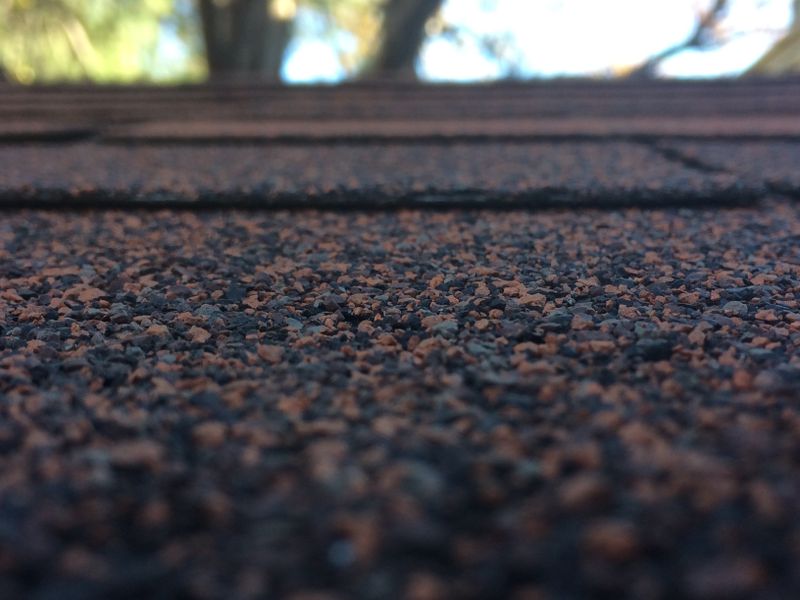
Walk into any roofing supply house in 2026 and ask for 3-tab shingles, and you might get a puzzled look. The product that dominated American residential roofing for most of the 20th century is rapidly disappearing from the market. Meanwhile, architectural shingles — also called dimensional or laminate shingles — have become the default choice for new construction and re-roofing alike.
But what actually separates the two products? And is 3-tab still worth considering if you can find it? This guide covers everything homeowners and contractors need to know.
The Visual Difference
The easiest way to distinguish the two products is by looking at a roof from the street.
3-tab shingles are a single-layer product with three evenly spaced notches cut into the exposed edge. When installed, these tabs give the illusion of three individual shingles per strip. The result is a flat, uniform pattern — neat, orderly, and somewhat monotonous. Every course looks identical to the one above and below it.
Architectural shingles are a multi-layer (laminate) product. A thicker base mat is bonded to a shorter overlay piece, creating a random-looking shadow line along the bottom edge. The effect mimics wood shakes or slate — each course has a different visual pattern, and the varying thickness creates genuine three-dimensional texture that reads from the ground as depth and character.
The difference in curb appeal is significant. Architectural shingles are widely considered to add more visual interest to a home’s exterior. Many real estate professionals and appraisers recognize this distinction, particularly in mid-range and upper-end home sales.
Construction and Weight
The manufacturing difference between the two products goes beyond appearance.
3-tab shingles are made from a single layer of fiberglass mat saturated with asphalt and coated with granules. A standard 3-tab shingle weighs approximately 200–240 lbs per square (100 sq ft). They’re thin — about 3/16 inch — and flexible.
Architectural shingles consist of two bonded layers: a full-length base piece and a shorter top laminate strip. This laminate construction gives them substantially more mass — typically 250–400 lbs per square depending on the product. The extra weight isn’t just for appearance; it contributes to wind and impact resistance.
This weight difference is rarely a structural concern for re-roofing. The additional 50–150 lbs per square over 3-tab is well within the tolerance of standard roof framing.
Wind Resistance
Wind performance is one of the starkest differences between the two product categories.
3-tab shingles are rated for winds up to 60–70 mph under standard installation (4 nails per shingle). With 6-nail enhanced nailing patterns, some products are rated to 90 mph. That’s Class D in ASTM D3161 and UL 997 classification.
Architectural shingles routinely carry a Class H wind rating — 130 mph with standard 4-nail installation. Many premium architectural products achieve this with 6 nails. Some high-performance architectural lines advertise 150 mph ratings with enhanced nailing.
For context, a Category 3 hurricane produces sustained winds of 111–129 mph; a Category 4 produces 130–156 mph. In hurricane-prone coastal areas, the wind rating gap between 3-tab and architectural shingles is not a minor footnote — it’s a fundamental product specification.
Even if you don’t live in a hurricane zone, severe thunderstorm-generated straight-line winds routinely exceed 70 mph across the Midwest, Great Plains, and Southeast. The wind rating of your shingles matters more than many homeowners realize until after the storm.
Warranty Coverage
This is where the market has shifted most decisively against 3-tab.
3-tab shingle warranties typically offer:
- 25-year limited manufacturer warranty
- Wind warranty: 60–70 mph (some up to 90 mph with enhanced installation)
- Transferability: Sometimes, but often with reduced coverage
- Algae resistance warranty: 10 years on products with AR granules
Architectural shingle warranties typically offer:
- 30-year to Lifetime limited manufacturer warranty (varies by product line)
- Wind warranty: 130 mph (with proper fastening)
- Transferability: Many products offer full transferability once (some manufacturers charge a fee)
- Algae resistance warranty: 10–25 years depending on product
- Workmanship warranty (from manufacturer-certified contractors): 2–25 years additional
The “lifetime” warranty on architectural shingles sounds impressive — and it is — but read the fine print. Lifetime warranties are typically prorated: after 10 years, the manufacturer may only cover a percentage of material cost, declining to nearly nothing at the warranty’s end. A 50-year non-prorated warranty is often more valuable in practice than a “lifetime” prorated warranty.
Cost Difference
The price gap between 3-tab and architectural shingles has narrowed considerably in recent years, which is part of why 3-tab has declined.
3-tab shingles: $80–$120 per square for material alone. Installed cost typically runs $3.50–$5.50 per square foot.
Architectural shingles: $100–$180 per square for standard products; $180–$350+ per square for premium designer lines. Installed cost typically runs $4.50–$7.00 per square foot for standard architectural products.
The material premium for architectural over 3-tab is roughly $1.00–$2.00 per square foot installed. On a 2,000 sq ft home (approximately 22–25 squares of roofing), the difference is roughly $1,500–$4,000 depending on product selection and labor market.
Given the improvements in wind rating, warranty, and appearance that come with architectural shingles, most roofing contractors — and most insurance companies — consider this premium well justified.
Insurance Implications
Insurance companies pay close attention to roofing materials, and the shift away from 3-tab has insurance-related dimensions.
Many insurance carriers offer discounts for impact-resistant (Class 4) roofing and, in some cases, for high-wind-rated roofing. Architectural shingles that carry Class 4 impact ratings (from modified asphalt formulations or rubber-polymer blends) can qualify for premium discounts of 10–25% in hail-prone markets. These discounts don’t apply to 3-tab products.
More broadly, carriers in high-risk wind and hail markets have become increasingly reluctant to write policies on homes with older 3-tab roofs. Some carriers in Texas, Oklahoma, and Kansas have added surcharges or coverage limitations for 3-tab roofing. If you’re in a high-risk area and your 3-tab roof is aging, the combination of product availability issues and insurance considerations makes the case for architectural shingles even more compelling.
Why 3-Tab Is Disappearing
If 3-tab shingles still have some cost advantage, why is it so hard to find them?
Several forces are converging:
Manufacturing economics. The raw material cost difference between 3-tab and standard architectural has shrunk. Manufacturers can produce architectural shingles on the same lines as 3-tab with minimal changeover cost. Given that architectural products command higher margins and stronger demand, manufacturers have been quietly discontinuing 3-tab SKUs.
Building code evolution. Many jurisdictions have adopted building codes requiring minimum wind resistance standards that 3-tab products can’t meet without enhanced nailing — and even then, they fall below what architectural products deliver by default.
Insurance market pressure. In high-risk states, insurers pushing homeowners toward higher-rated products effectively eliminates 3-tab from practical consideration in those markets.
Contractor preference. Most experienced roofers prefer architectural shingles because they’re faster to install, more forgiving of minor misalignment (the random pattern hides small errors), and less likely to generate callbacks from leaks or storm damage.
Homeowner preference. Once consumers see architectural shingles on display or on a neighbor’s home, they overwhelmingly prefer the appearance. The flat, repetitive look of 3-tab feels dated.
When 3-Tab Still Makes Sense
There are still legitimate use cases for 3-tab shingles:
Low-slope repairs on existing 3-tab roofs. Matching existing 3-tab is easier and cheaper than tearing off and re-roofing.
Budget rentals and investor properties. When maximizing cash flow on rental property is the priority and the property is in a low-risk wind/hail market, 3-tab can make economic sense.
Historical or aesthetic matching. Some older homes look period-correct with flat 3-tab shingles and would look out of place with textured architectural products.
Outbuildings, garages, and sheds. The appearance upgrade from architectural shingles matters much less on secondary structures.
Quick Decision Guide
| Your Situation | Recommended Choice |
|---|---|
| New home or full re-roof | Architectural — always |
| High wind or hurricane zone | Architectural (Class H rated) |
| Hail-prone area | Architectural (Class 4 impact if available) |
| Budget re-roof, simple structure | Architectural (standard product) |
| Matching existing 3-tab for repair | 3-tab (if available in your area) |
| Investment property, minimal budget | 3-tab (if available) or entry-level architectural |
| Historic home, flat appearance needed | 3-tab or flat-profile architectural |
The practical conclusion for most homeowners in 2026 is simple: choose architectural shingles. The price difference is modest, the performance advantages are real, the warranty is better, and the product is readily available. Unless you have a specific reason to seek out 3-tab, the market has already made the decision for you.

ShingleScience Team
Roofing Contractor & Founder of ShingleScience